

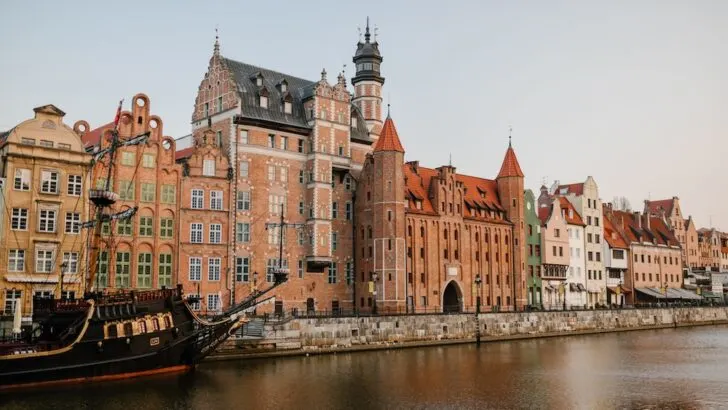
Gdańsk is a historic and picturesque city located on the northern coast of Poland, along the shores of the Baltic Sea. As one of the most prominent cities in the country, Gdańsk holds a unique place in history due to its strategic location, maritime heritage, and role in shaping Poland’s identity and Europe’s history.
Rich History and Maritime Heritage: Gdańsk’s history dates back over a thousand years, marked by periods of prosperity, cultural exchange, and notable events.
The city’s strategic position at the mouth of the Vistula River made it a crucial port and trading hub. Its maritime heritage is deeply ingrained in its identity, with shipbuilding, trade, and seafaring playing integral roles throughout the centuries.
Hanseatic League and Economic Influence: Gdańsk was a key member of the Hanseatic League, a powerful medieval trading alliance.
The city’s merchant houses, charming Old Town, and historic docks are a testament to its prominent position in European trade during the Middle Ages. Gdańsk’s commercial success influenced its architecture, culture, and interactions with other Baltic Sea cities.
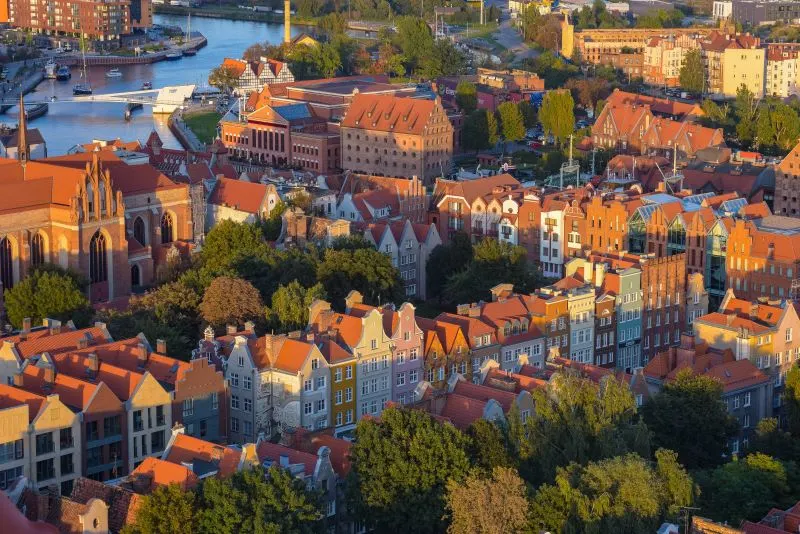
Old Town and Architectural Splendors: The heart of Gdańsk is its beautifully preserved Old Town, characterized by cobblestone streets, colorful facades, and Gothic and Renaissance architecture.
Key landmarks such as St. Mary’s Church, Artus Court, and the iconic Gdańsk Crane stand as witnesses to the city’s past glory.
Modern Identity and Cultural Fusion: Gdańsk’s history is also marked by its multicultural nature, with influences from Polish, German, Dutch, and other cultures. This cultural fusion is reflected in the city’s cuisine, architecture, and traditions.
Today, Gdańsk embraces its modern identity as a bustling port city, a center of education and culture, and a hub for tourism and international exchange.
World War II and Solidarity Movement: Gdańsk played a significant role in shaping modern history. It was here that World War II began with the German invasion of Westerplatte.
The city also gained international attention as the birthplace of the Solidarity movement, a pivotal force in Poland’s struggle for democracy and freedom.
Cosmopolitan City and Tourist Destination: Gdańsk’s cosmopolitan atmosphere is enhanced by its proximity to the neighboring towns of Sopot and Gdynia, collectively known as the Tricity.
The area boasts sandy beaches, cultural events, and a thriving culinary scene. Visitors can explore museums, art galleries, and experience the blend of historical charm and contemporary life.
A City of Legends and Stories: Gdańsk is a city of legends and stories, from tales of the mythical “Kraken” in its waters to its role in World War II and the Solidarity movement.
Its history, told through its architecture, museums, and cultural attractions, invites visitors to connect with the past and embrace the vibrant present.
In essence, Gdańsk is a city that beautifully weaves its historical significance with modern vibrancy. Its maritime legacy, cultural diversity, and architectural treasures make it a captivating destination that invites travelers to explore its charming streets, learn about its past, and enjoy its contemporary offerings.
1. St. Mary’s Church (Bazylika Mariacka): Admire the grandeur of this brick Gothic church, known for its towering spires and intricate interior

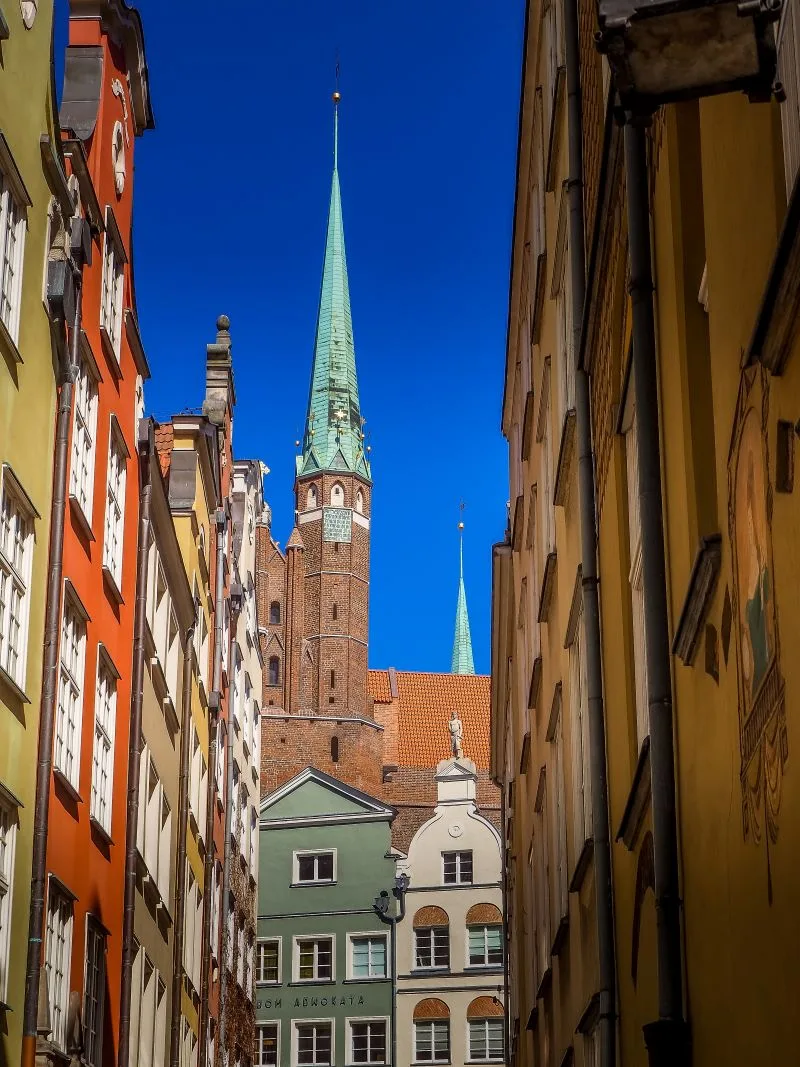
St. Mary’s Church, also known as Bazylika Mariacka in Polish, is a remarkable Gothic masterpiece located in the heart of Gdańsk’s Old Town.
This towering brick church is one of the largest brick churches in the world and a prominent symbol of the city. Its two towering spires reach skyward, dominating the city’s skyline.
The church’s exterior features intricate details and decorative elements, showcasing the architectural beauty of the Gothic style. Inside, visitors are treated to a stunning interior with high vaulted ceilings, impressive stained glass windows, and intricate wooden decorations.
One of the most famous features of St. Mary’s Church is its enormous astronomical clock, which dates back to the 15th century. The clock’s mechanism is still operational and displays not only the time but also astronomical and calendrical information.
The church has played a significant role in Gdańsk’s history, witnessing numerous historical events and serving as a place of worship, reflection, and cultural heritage.
Visitors often appreciate both the exterior grandeur and the peaceful interior, making a visit to St. Mary’s Church a must for anyone exploring Gdańsk.
2. Długi Targ (Long Market): Walk through this historic market square, surrounded by colorful merchant houses and featuring Neptune’s Fountain

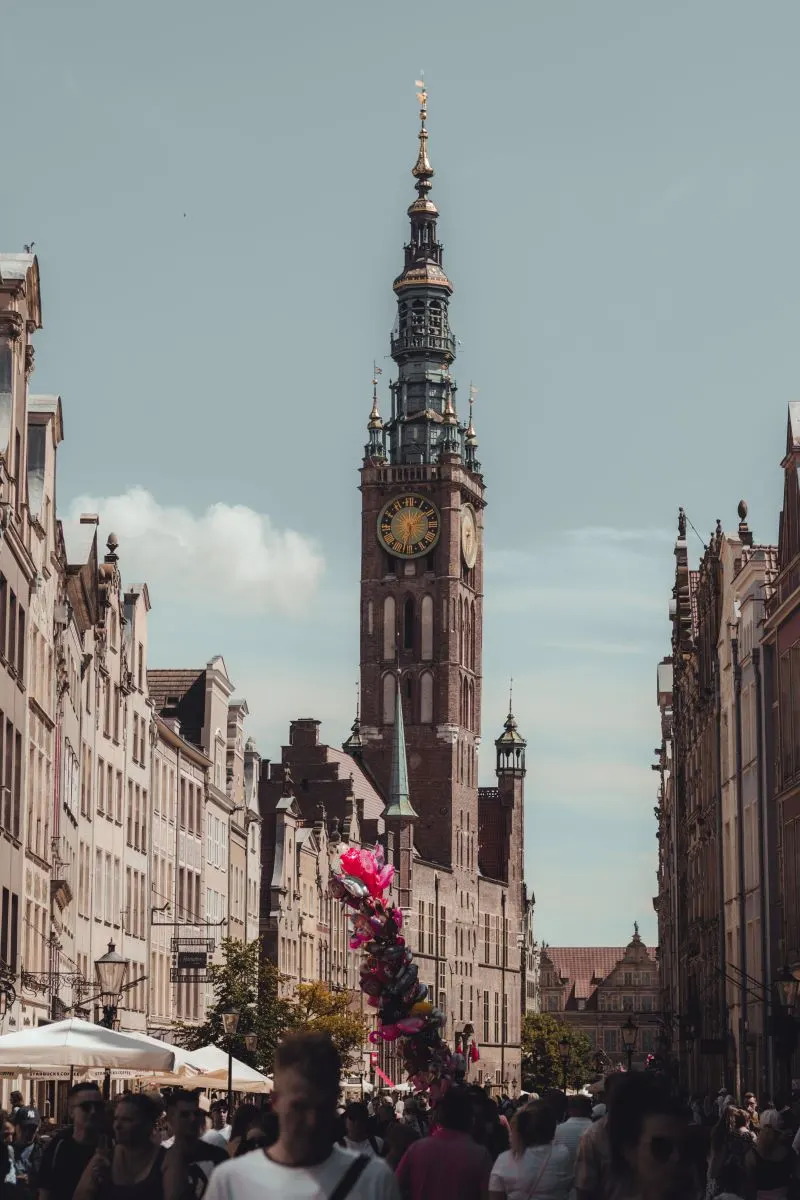
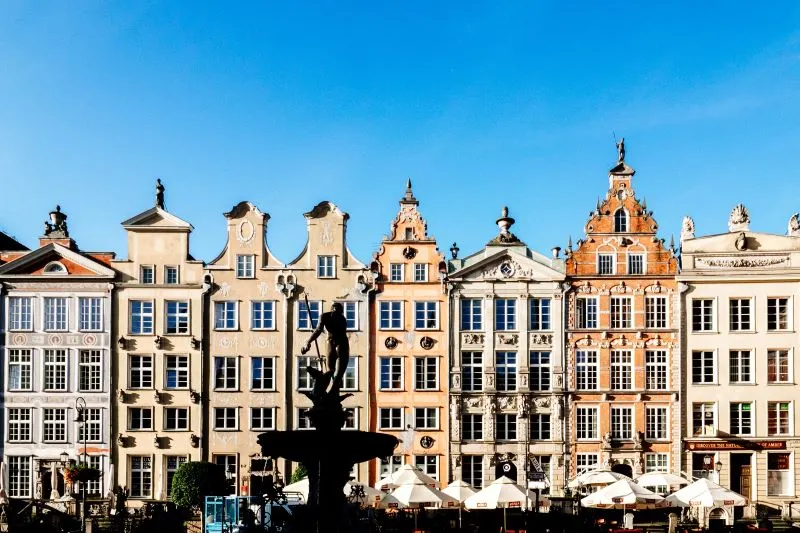
Długi Targ, commonly known as the Long Market, is a historic market square located in the heart of Gdańsk’s Old Town. This bustling and picturesque area is a focal point for visitors seeking to immerse themselves in the city’s rich history and vibrant atmosphere.
The Long Market is lined with beautifully preserved merchant houses, each adorned with colorful facades and intricate architectural details.
These buildings date back to the Renaissance and serve as a stunning backdrop for the various activities that take place in the square.
At the center of the Long Market stands Neptune’s Fountain, a striking bronze statue of the Roman god of the sea. This fountain has become an iconic symbol of Gdańsk and is often a meeting point for tourists exploring the area.
Throughout the year, the Long Market hosts various events, festivals, and markets, adding to its lively ambiance. Visitors can enjoy outdoor cafes, artisan stalls, and street performers while taking in the historical surroundings.
The Long Market is not only a hub of cultural and social activity but also a place to appreciate Gdańsk’s architectural heritage and the fusion of historical and modern influences that make the city unique.
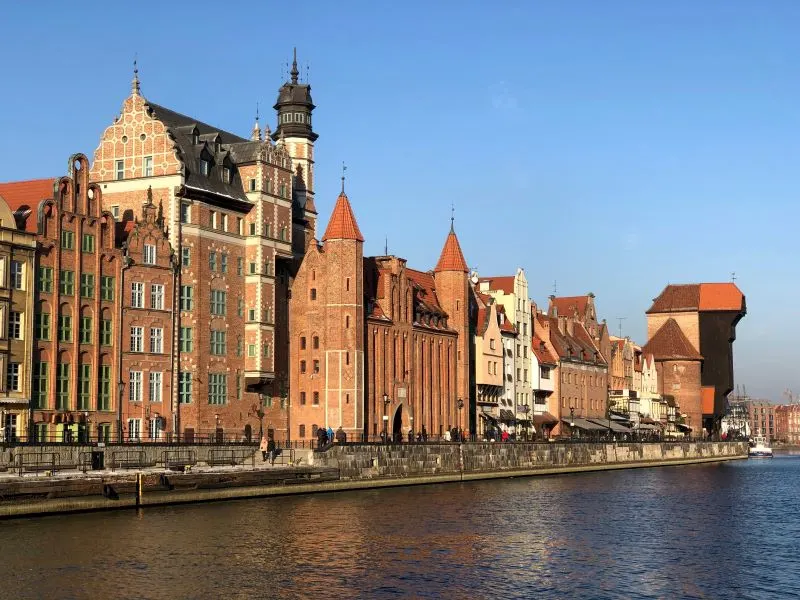
3. Gdańsk Crane (Żuraw): Explore this medieval port crane turned maritime museum, offering insights into Gdańsk’s maritime history

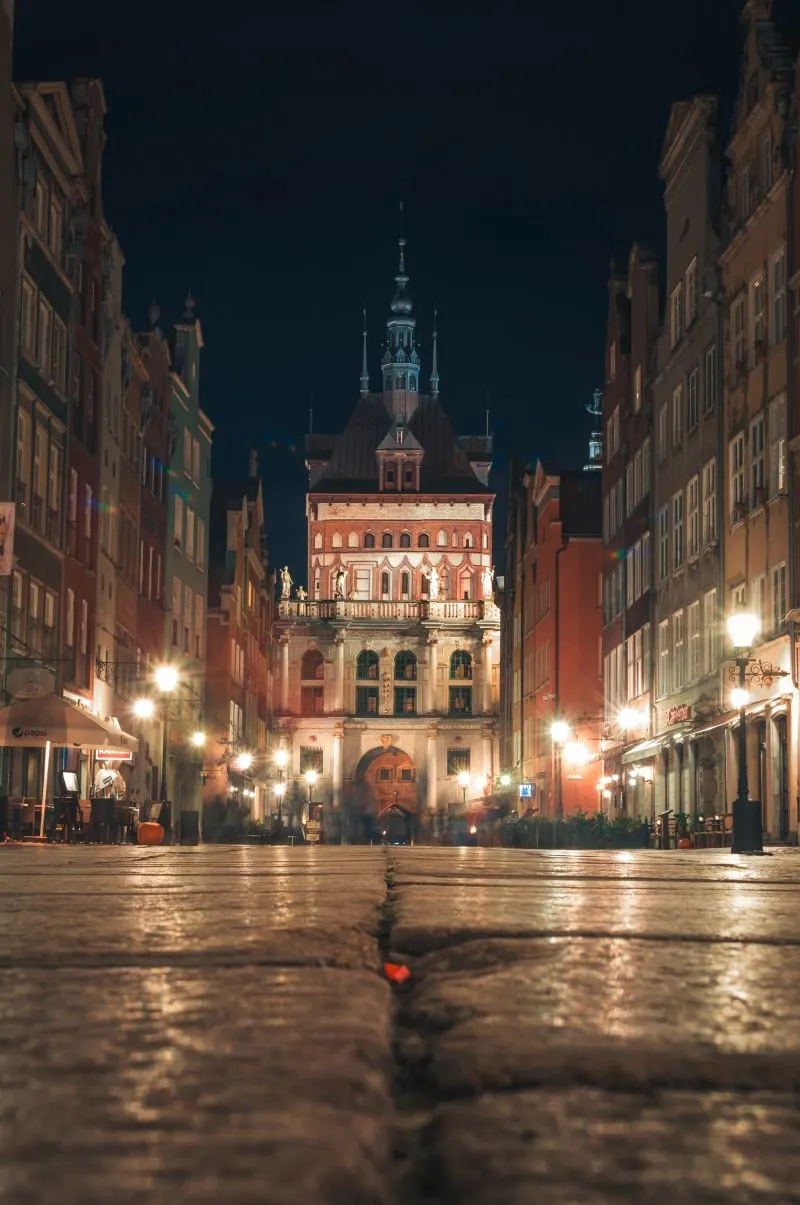
The Gdańsk Crane, known as Żuraw in Polish, is a historic port crane located on the banks of the Motława River in Gdańsk, Poland.
This massive medieval crane is one of the most iconic symbols of the city’s maritime history and has been a witness to centuries of trade and shipbuilding activities.
Built in the 14th century, the Gdańsk Crane served as an essential tool for loading and unloading cargo from ships. Its large wooden arm, or boom, could lift heavy loads, showcasing the engineering skills of its time.
The crane also played a role in shipbuilding, as its mechanism could lift masts and other heavy components onto ships under construction.
Today, the Gdańsk Crane has been transformed into a maritime museum, providing visitors with insights into Gdańsk’s trading history, shipbuilding traditions, and maritime commerce.
Inside the crane, you can find exhibits that showcase the evolution of maritime technology, artifacts related to trade, and interactive displays that bring the history of the crane and the river to life.
Visiting the Gdańsk Crane allows you to step back in time and imagine the bustling port activities that once took place along the riverfront.
The crane’s towering presence and historical significance make it a must-see attraction for those interested in maritime heritage and Gdańsk’s role as a key trading hub in the past.
4. Gdańsk Old Town: Stroll through the narrow streets of the Old Town, admiring the well-preserved medieval and Renaissance architecture

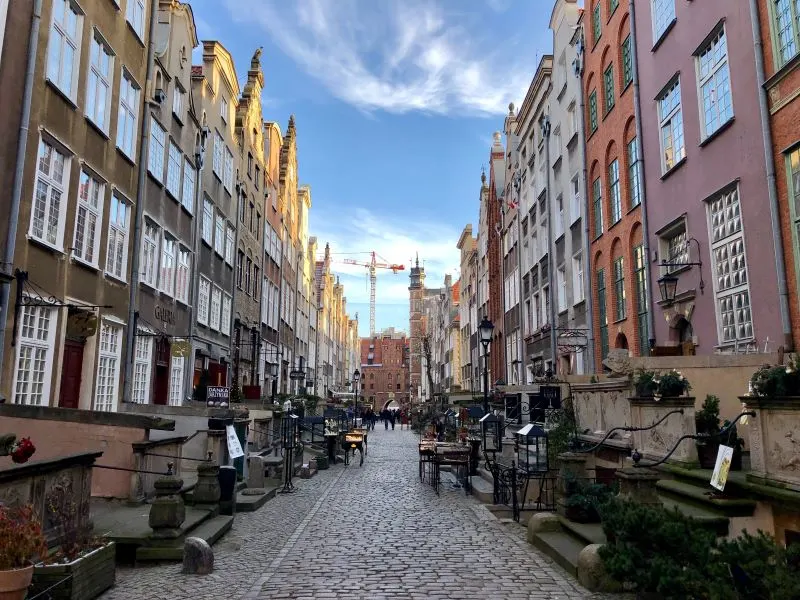
Gdańsk’s Old Town is a charming and historic district that serves as the heart of the city’s cultural, architectural, and social heritage.
Stepping into the Old Town feels like entering a time capsule, with its well-preserved medieval and Renaissance buildings, cobbled streets, and rich history.
The architecture in Gdańsk’s Old Town is a blend of Gothic, Renaissance, and Baroque styles, reflecting the city’s role as a major trading port and its historical interactions with various cultures. The intricate facades, ornate gables, and decorative elements on the buildings tell stories of the past.
At the heart of the Old Town is Długi Targ (Long Market), a vibrant market square flanked by colorful merchant houses.
This is where you’ll find the impressive Neptune’s Fountain and the Artus Court, a historic building that once hosted merchants’ meetings and now houses a museum.
Walking through the narrow streets of the Old Town, visitors can discover hidden courtyards, charming cafes, artisan shops, and traditional Polish restaurants.
St. Mary’s Church with its towering spires is a prominent landmark, while the medieval Gdańsk Crane along the Motława River adds to the district’s historical significance.
The Old Town also played a crucial role in shaping Gdańsk’s identity, as it was here that historical events like the signing of the Treaty of Westphalia took place, marking the end of the Thirty Years’ War.
5. European Solidarity Centre: Learn about the history of Solidarity movement and its role in Poland’s fight for democracy

The European Solidarity Centre (ECS) is a museum, cultural institution, and research center located in Gdańsk, Poland.
It is dedicated to preserving and commemorating the history of the Solidarity movement, a significant social and political movement that played a pivotal role in the fight for democracy and workers’ rights in Poland and beyond.
The ECS is a modern and architecturally distinctive building, designed to evoke the image of a ship’s hull, symbolizing the shipyard strikes that were a crucial element of the Solidarity movement’s beginnings.
The center is not just a museum; it’s a space for reflection, education, and dialogue about the values of freedom, human rights, and social justice.
Inside, the European Solidarity Centre offers a range of exhibits, multimedia displays, archival materials, and personal testimonies that chronicle the history and impact of the Solidarity movement.
Visitors can learn about key figures like Lech Wałęsa, the movement’s leader, and the events that led to the eventual collapse of communism in Poland and other Eastern European countries.
The ECS also hosts temporary exhibitions, lectures, discussions, and cultural events that explore the broader themes of democracy, social change, and human rights.
It’s a place where visitors can gain a deep understanding of the struggles and achievements that have shaped Poland’s recent history and have implications for global movements for justice and equality.
6. Westerplatte: Visit the site of the first battle of World War II, marked by a monument and museum

Westerplatte is a historic site located in Gdańsk, Poland, that holds immense significance as the location of the first battle of World War II.
This peninsula, situated at the entrance of the port of Gdańsk, became a symbol of Polish resistance and determination in the face of German aggression.
On September 1, 1939, the German battleship Schleswig-Holstein opened fire on the Polish garrison stationed at Westerplatte, marking the beginning of World War II.
Despite being heavily outnumbered and outgunned, the Polish defenders held their ground for nearly a week before surrendering. The heroic resistance of the Polish soldiers and their refusal to yield quickly became a symbol of national pride and bravery.
Today, Westerplatte is a memorial and historical site that pays tribute to the soldiers who fought there and to all those who lost their lives during World War II.
Visitors can explore the remnants of the fortifications, including bunkers and guardhouses, and learn about the events that unfolded on this site through exhibitions, memorials, and plaques.
The Monument to the Coast Defenders stands as a solemn reminder of the sacrifice made by the Polish soldiers. The site’s peaceful surroundings contrast with its turbulent history, creating a place for reflection on the cost of war and the importance of preserving peace and unity.
7. Oliwa Cathedral (Bazylika Archikatedralna w Gdańsku-Oliwie): Enjoy the beautiful Baroque architecture and listen to the famous Oliwa Organ concerts

The Oliwa Cathedral, officially known as the Archcathedral Basilica of the Assumption of the Blessed Virgin Mary and St. Bernard in Oliwa, is a stunning example of Baroque architecture located in the Oliwa district of Gdańsk, Poland.
This historic cathedral is renowned not only for its religious significance but also for its breathtaking interior and exceptional organ.
The cathedral’s exterior features a combination of Baroque and Gothic elements, with intricate decorations and sculptures adorning the façade.
However, it’s the interior that truly captivates visitors. The cathedral’s nave boasts awe-inspiring vaulted ceilings, ornate chapels, and beautifully designed altars, all showcasing the opulence of the Baroque style.
One of the most remarkable features of the Oliwa Cathedral is its world-famous organ. This massive instrument, built in the 18th century, is renowned for its exquisite sound and intricate details.
The organ is known for its elaborate carvings, including moving figurines and angels playing various musical instruments, all of which come to life during performances.
The cathedral hosts regular organ concerts that allow visitors to experience the grandeur of the instrument and the acoustics of the space.
Adjacent to the cathedral is the Oliwa Park, a peaceful and lush green area that complements the cathedral’s serene ambiance.
The combination of architectural beauty, historical significance, and musical excellence makes the Oliwa Cathedral a must-visit destination for travelers seeking cultural and spiritual experiences in Gdańsk.
8. Artus Court (Dwór Artusa): Explore this historic building that served as a meeting place for merchants, now a museum showcasing Gdańsk’s history

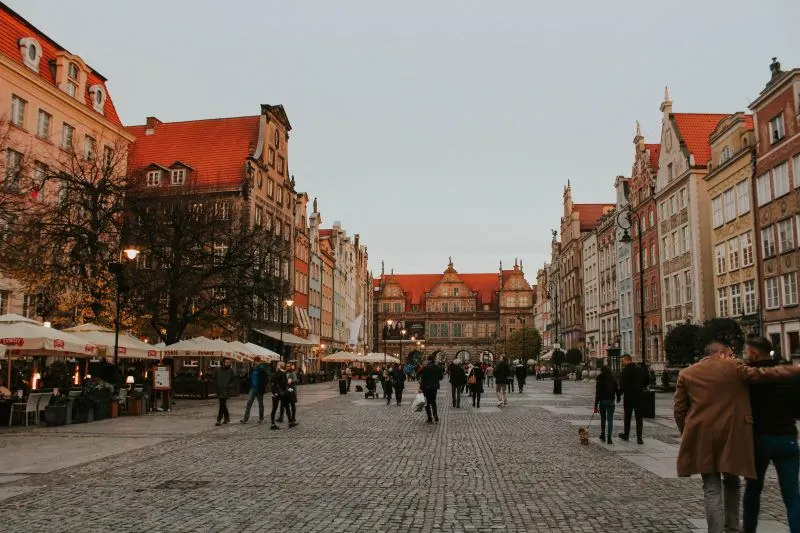
Artus Court, known as Dwór Artusa in Polish, is a historic building located in the heart of Gdańsk’s Old Town. It holds a significant place in the city’s history as a meeting place for merchants, dignitaries, and intellectuals during the Renaissance period. Today, it stands as a museum and a symbol of Gdańsk’s historical and cultural heritage.
The exterior of Artus Court is characterized by its grand architecture, featuring ornate decorations, colorful facades, and intricate sculptures. The building’s design is a testament to the wealth and prestige of the merchants’ guilds that gathered there.
Inside, the interior of Artus Court is equally impressive, with a spacious hall that was used for meetings, banquets, and cultural events.
The hall is adorned with rich decorations, elaborate wooden carvings, and a remarkable Renaissance-style fireplace. The atmosphere evokes the sense of grandeur and sophistication that once characterized the gatherings held within its walls.
The museum housed within Artus Court offers visitors a glimpse into Gdańsk’s history as a prosperous trading hub. Exhibits include historical artifacts, artworks, and items related to the merchant guilds that frequented the building. There are also displays that capture the essence of life during the Renaissance period in Gdańsk.
Artus Court continues to be a place of cultural significance, hosting events, concerts, and exhibitions that celebrate Gdańsk’s heritage and its role in European history.
A visit to Artus Court provides a unique opportunity to step back in time and immerse oneself in the elegance and intellectual exchange of the Renaissance era.
9. National Maritime Museum (Narodowe Muzeum Morskie): Immerse yourself in Poland’s maritime heritage through various exhibits and artifacts

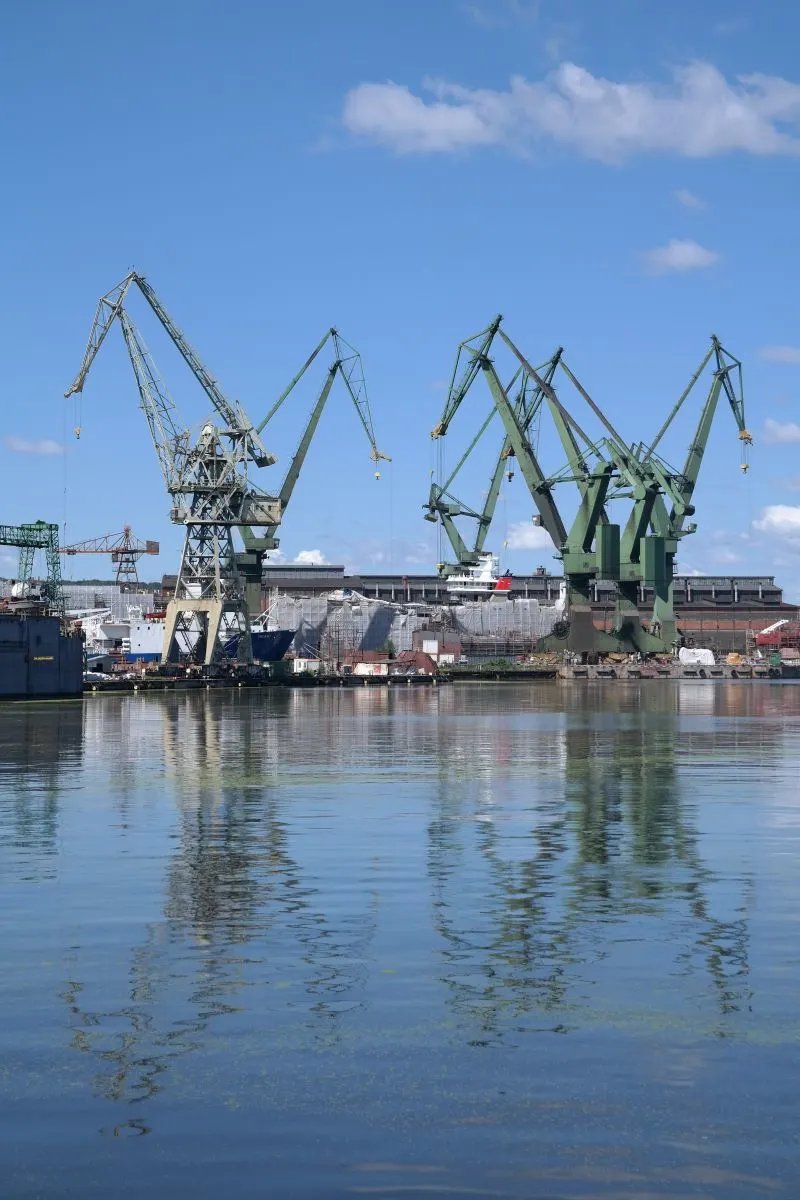
The National Maritime Museum (Narodowe Muzeum Morskie) is a prominent cultural institution in Gdańsk, Poland, dedicated to preserving and showcasing the country’s rich maritime heritage.
It stands as one of the largest and most comprehensive maritime museums in Europe, offering visitors a fascinating journey through Poland’s maritime history, seafaring traditions, and nautical achievements.
Housed in a historic building complex that was once a medieval granary and a shipyard, the museum itself is a blend of history and architecture.
Its expansive exhibition space covers various aspects of maritime life, from shipbuilding and navigation to trade and exploration.
Visitors to the National Maritime Museum can explore a wide range of exhibits that include ship models, navigational instruments, marine art, historic artifacts, and interactive displays.
These exhibits provide insights into Poland’s maritime connections, its naval history, and the technological advancements that have shaped the country’s relationship with the sea.
One of the highlights of the museum is the opportunity to board and explore actual historic ships docked at the museum’s harbor. These vessels offer a hands-on experience, allowing visitors to step onto the decks and imagine life at sea in different eras.
The National Maritime Museum’s commitment to education and engagement extends beyond its exhibitions. It also hosts workshops, lectures, temporary exhibitions, and cultural events that further enrich the visitor experience and foster a deeper understanding of maritime culture.
10. Amber Museum: Learn about Gdańsk’s amber trade history and marvel at stunning amber artifacts


The Amber Museum in Gdańsk is a unique cultural institution dedicated to the fascinating world of amber, often referred to as “Baltic gold.”
Situated in a city known for its historical significance in the amber trade, the museum provides a comprehensive look into the history, geology, craftsmanship, and cultural significance of this precious gemstone.
The museum’s exhibits offer a diverse array of amber specimens, ranging from raw pieces to exquisite jewelry and intricate artworks made from amber.
Visitors can learn about the origins of amber, its formation over millions of years, and its extraction from the Baltic Sea. The museum also delves into the ancient history of amber trading, exploring its connections to various cultures and its role as a trade commodity.
One of the highlights of the Amber Museum is the display of amber inclusions—preserved ancient organisms, plants, and even small insects trapped within the amber resin.
These inclusions offer a fascinating glimpse into prehistoric ecosystems and provide valuable insights to scientists and enthusiasts alike.
Visitors can also gain insight into amber craftsmanship, including traditional methods of amber processing, carving, and jewelry-making.
The museum showcases intricate amber artworks, demonstrating the skill and creativity involved in transforming this gemstone into exquisite pieces.
11. Mariacka Street: Wander along this charming street lined with amber shops, cafes, and traditional buildings

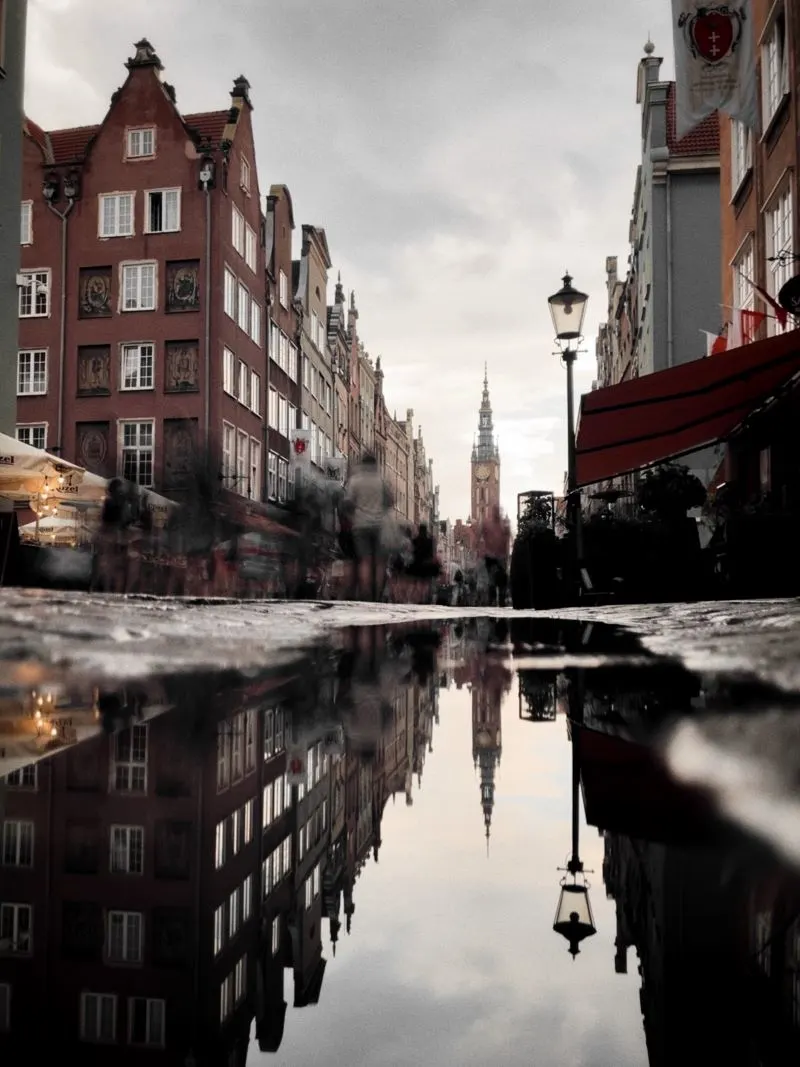
Mariacka Street is a charming and picturesque cobblestone street located in Gdańsk’s Old Town, known for its historical significance and its association with amber trade and craftsmanship.
Lined with beautifully preserved historical buildings, Mariacka Street is a popular destination for tourists seeking to explore Gdańsk’s cultural and artisanal heritage.
The street is renowned for its amber boutiques and workshops, where artisans craft intricate amber jewelry and decorative pieces.
Visitors can find a wide range of amber products, from necklaces and bracelets to earrings and sculptures, all showcasing the beauty and versatility of this precious gemstone.
In addition to its amber-related attractions, Mariacka Street offers a unique atmosphere with its cobblestone pavement, traditional facades, and a variety of cafes and restaurants.
It’s a delightful place to take a leisurely stroll, enjoy some local cuisine, and immerse yourself in the historical ambiance of Gdańsk.
At the end of Mariacka Street stands St. Mary’s Church (Bazylika Mariacka), an iconic Gothic church with towering spires that can be seen from various parts of the city. This adds to the street’s picturesque character and offers a compelling backdrop for photographs.
12. Green Gate (Brama Zielona): Admire the elegant architecture of this gate, which once served as an entrance to the city for visiting monarchs

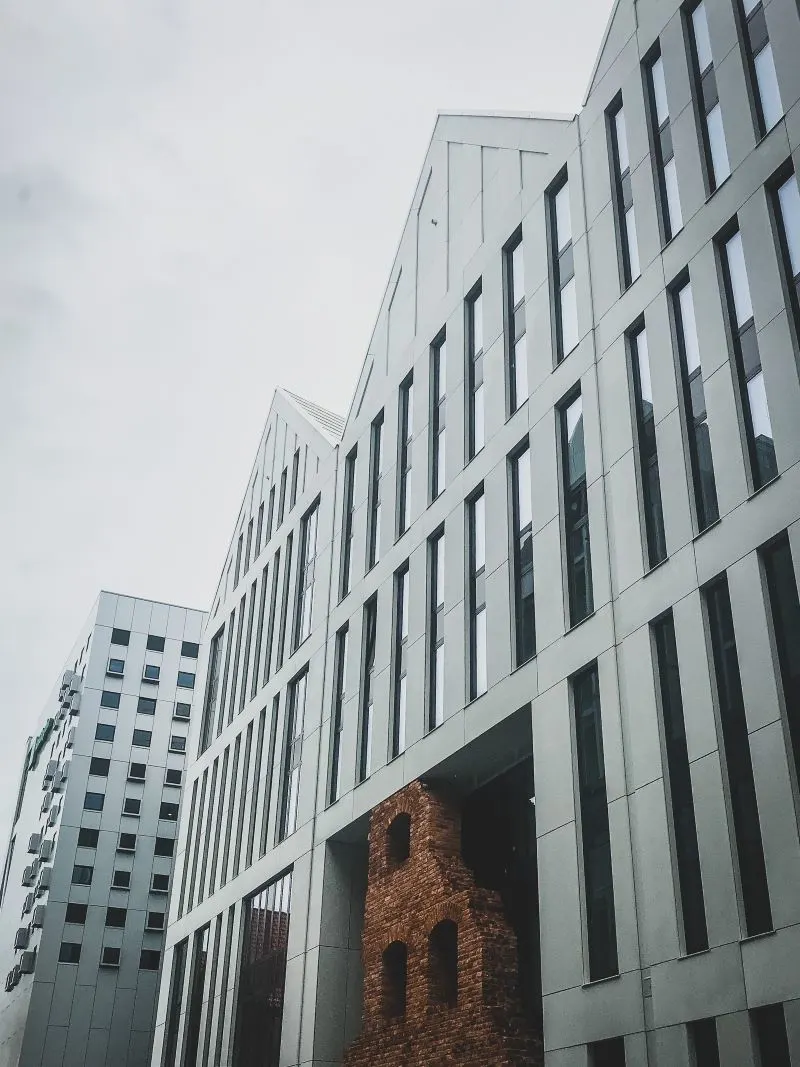
The Green Gate, known as Brama Zielona in Polish, is a historic architectural gem located in Gdańsk’s Old Town. This elegant gate is a symbol of the city’s maritime and trade heritage and holds significance as both an architectural masterpiece and a historical landmark.
Built in the 16th century, the Green Gate is characterized by its distinctive Dutch Mannerist design, which incorporates elements of Renaissance and Gothic styles.
The gate’s name comes from its greenish hue, which is a result of the copper roof and the oxidization of the materials used in its construction.
The Green Gate served as an important entrance to the city for visiting monarchs, diplomats, and dignitaries. It also served as a residence for Polish kings during their visits to Gdańsk.
The gate’s grandeur and historical significance are evident in its ornate decorations, including sculptures, reliefs, and inscriptions that depict various historical events and figures.
Today, the Green Gate houses a branch of the National Museum in Gdańsk, where visitors can explore exhibitions related to Gdańsk’s history, art, and culture.
The gate’s central location near the waterfront and its architectural beauty make it a popular spot for both tourists and locals.
13. Royal Way: Follow this historic route, passing key landmarks and offering picturesque views of the city

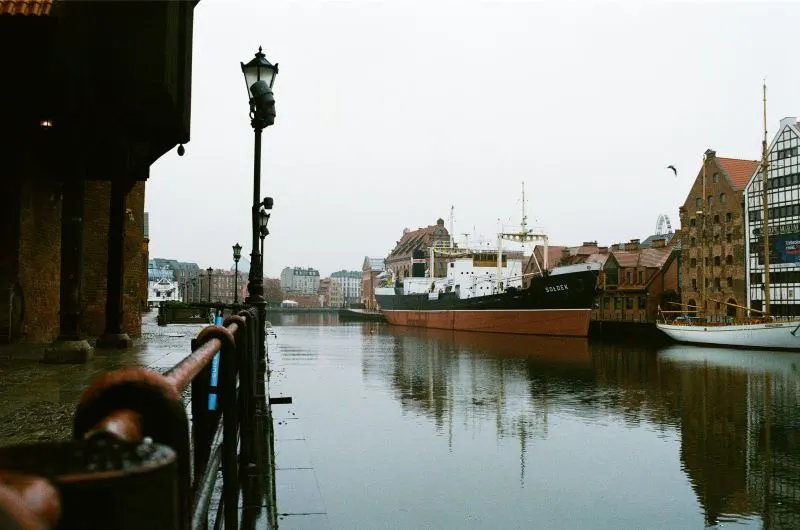
The Royal Way (Droga Królewska) is a historic route in Gdańsk that leads through the city’s Old Town, connecting key landmarks and offering a picturesque journey through its rich history and cultural heritage.
This route has been followed by monarchs, dignitaries, and notable figures visiting Gdańsk throughout the centuries.
The Royal Way begins at the Upland Gate (Brama Wyżynna), an impressive entrance to the city, and winds its way through charming cobbled streets, past historic buildings, and iconic landmarks. It’s a pathway that invites visitors to step back in time and experience the grandeur and elegance of Gdańsk’s past.
As you follow the Royal Way, you’ll encounter notable sites such as the Neptune Fountain in Długi Targ (Long Market), the Artus Court, St. Mary’s Church with its towering spires, and the Green Gate.
Each of these landmarks holds historical and cultural significance, representing different aspects of Gdańsk’s identity and heritage.
The route offers a diverse range of architectural styles, from the Gothic beauty of St. Mary’s Church to the ornate facades of the merchant houses along the Long Market.
The Royal Way provides an opportunity to appreciate Gdańsk’s evolution over the centuries, from its medieval origins to its Renaissance and Baroque influences.
14. National Museum in Gdańsk: Explore a wide range of art and historical exhibitions in this renowned museum

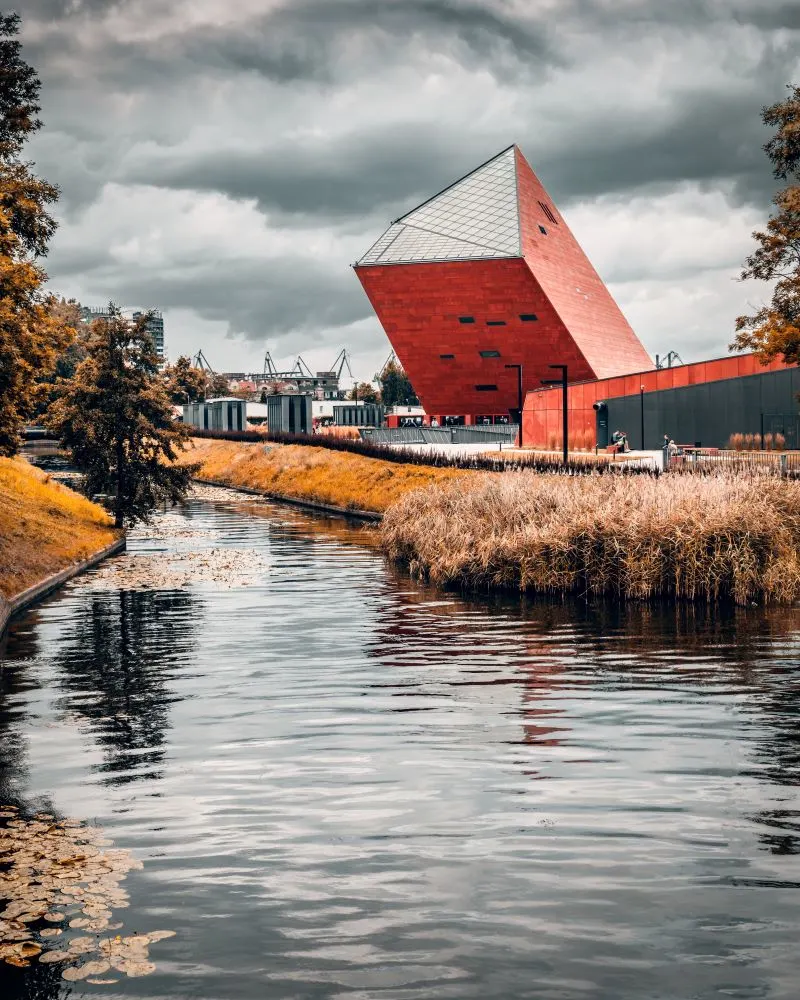
The National Museum in Gdańsk is a significant cultural institution that showcases a diverse collection of art, artifacts, and historical exhibits, offering visitors insights into the region’s history, culture, and artistic achievements. The museum plays a pivotal role in preserving and presenting Gdańsk’s heritage to both locals and tourists.
Housed in various historic buildings throughout the city, the museum’s exhibitions cover a wide range of topics. Visitors can explore art from different periods, including Polish and European paintings, sculptures, and decorative arts.
The museum also delves into Gdańsk’s history, providing insights into its role as a bustling port city, its connections with trade and maritime commerce, and its cultural evolution.
One of the prominent locations of the National Museum is the Main Town Hall (Ratusz Głównego Miasta), a grand Gothic building in the heart of the Old Town.
Here, visitors can immerse themselves in historical displays that highlight the city’s development and its significance in shaping Poland’s history.
The museum’s offerings include temporary exhibitions that focus on various themes, ensuring that each visit provides a fresh perspective and new discoveries.
Whether you’re interested in art, history, or cultural heritage, the National Museum in Gdańsk offers a diverse range of experiences that capture the essence of the city’s past and present.
15. Gdańsk Shakespeare Theatre: Catch a performance at this unique theater, known for its Elizabethan-style architecture

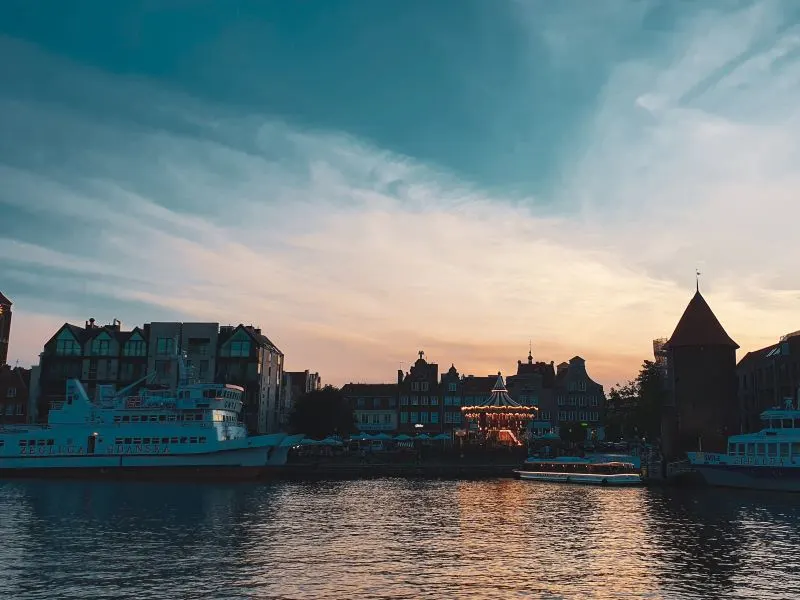
The Gdańsk Shakespeare Theatre is a unique cultural venue in Gdańsk, Poland, dedicated to the works of William Shakespeare and the performing arts.
Designed to resemble Elizabethan theaters from Shakespeare’s time, this theater offers a distinctive setting for enjoying classic plays, modern productions, and cultural events.
The architecture of the Gdańsk Shakespeare Theatre is a nod to the past, featuring wooden structures and an open-air courtyard, much like the theaters that existed during Shakespeare’s era.
The theater’s circular design allows for an intimate and immersive experience, where the audience can be close to the action on stage.
The theater’s repertoire includes a wide range of performances, not only limited to Shakespearean plays but also encompassing other classic dramas, contemporary works, concerts, and cultural events.
The aim is to provide a platform for artistic expression and storytelling that resonates with audiences of all ages and backgrounds.
The Gdańsk Shakespeare Theatre is not just a performance venue; it also houses an educational center where workshops, lectures, and discussions are held to engage with the public and promote a deeper understanding of the theatrical arts and literature.
16. Westerplatte Monument: Pay homage to the Polish defenders of Westerplatte with a visit to this solemn monument

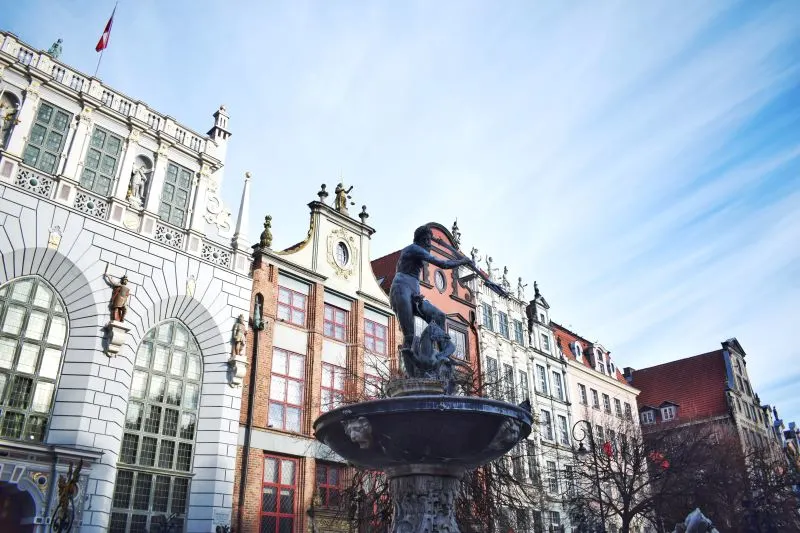
The Westerplatte Monument is a solemn and significant memorial located in Gdańsk, Poland. It commemorates the heroic defense of Westerplatte, a peninsula in Gdańsk’s harbor, during the first days of World War II.
The monument stands as a tribute to the Polish soldiers who valiantly resisted the German invasion in September 1939 and symbolizes the nation’s enduring spirit and resistance in the face of adversity.
The monument consists of several elements, including a tall obelisk and a symbolic sculpture of Polish defenders. The obelisk bears inscriptions that honor the memory of those who fought and fell during the battle.
Nearby, visitors can find a cemetery where Polish soldiers who lost their lives in the defense of Westerplatte are buried.
The Westerplatte Monument is a site of remembrance, reflection, and historical significance. It stands as a reminder of the sacrifices made by the Polish soldiers and the nation’s determination to defend its sovereignty and freedom.
The monument’s serene surroundings provide a space for contemplation on the horrors of war and the importance of preserving peace.
Visiting the Westerplatte Monument offers a chance to pay respects to those who defended their country and to acknowledge the impact of World War II on Poland and the world.
It’s a place to honor history, honor the memory of those who served, and reaffirm the importance of fostering international understanding and cooperation.
17. St. Bridget’s Church: Marvel at the impressive architecture and interior design of this Gothic church

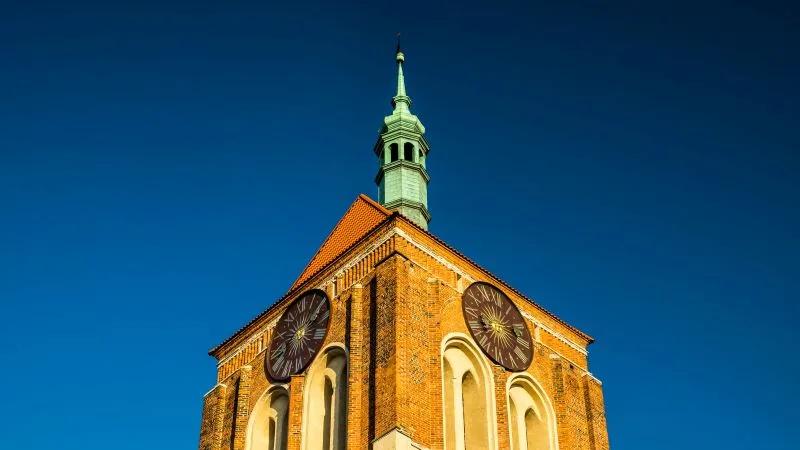
St. Bridget’s Church, also known as Kościół św. Brygidy in Polish, is a historic religious building located in the heart of Gdańsk’s Old Town.
This church is a remarkable example of Brick Gothic architecture and holds cultural, historical, and architectural significance in the city.
Built in the 14th century, St. Bridget’s Church features the characteristic elements of Gothic design, including pointed arches, ribbed vaults, and intricate decorations.
Its red-brick exterior stands as a testament to the architectural style that flourished in the Baltic Sea region during the medieval period.
One of the most distinctive features of the church is its impressive tower, which reaches a height of over 70 meters (230 feet).
This tower, visible from various parts of Gdańsk, adds to the city’s skyline and offers panoramic views of the surrounding area for those willing to climb its narrow staircase.
Inside, visitors can appreciate the elegant simplicity of the church’s interior, with tall columns, stained glass windows, and wooden details that contribute to its Gothic charm. The church has witnessed various historical events and has served as a place of worship and reflection for centuries.
18. Museum of the Second World War (Muzeum II Wojny Światowej): Gain insights into the global impact of World War II through extensive exhibits and multimedia

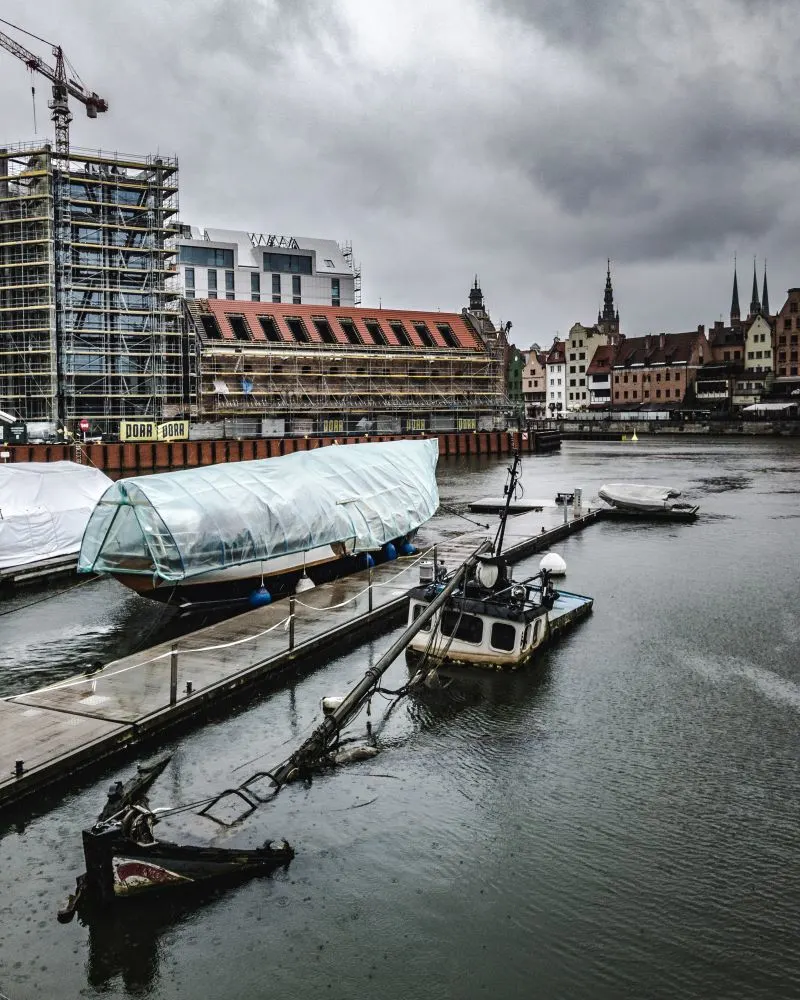
The Museum of the Second World War (Muzeum II Wojny Światowej) is a comprehensive and modern museum located in Gdańsk, Poland, dedicated to the history and impact of World War II on a global scale.
The museum aims to provide visitors with a deep understanding of the war’s causes, events, and consequences, emphasizing the experiences of both soldiers and civilians.
The museum’s architecture is distinctive, featuring a striking modern design that stands out while harmonizing with the historical context of the city. Inside, the exhibits are organized chronologically, guiding visitors through the pre-war period, the outbreak of the war, its major battles, and its aftermath.
Through a combination of artifacts, photographs, interactive displays, multimedia presentations, and personal testimonies, the Museum of the Second World War offers a multifaceted perspective on the war’s complexity and its profound impact on people’s lives.
The exhibits cover a wide range of topics, including the Holocaust, resistance movements, technological advancements, and the diplomatic and political aspects of the war.
The museum doesn’t focus solely on military history; it also explores the war’s social, cultural, and economic dimensions.
This comprehensive approach allows visitors to gain insights into the experiences of individuals from different countries and backgrounds, fostering empathy and understanding.
19. Gdańsk Zoo: Spend a day with family exploring this well-maintained zoo featuring a variety of animals


Gdańsk Zoo is a popular and family-friendly attraction located in Gdańsk, Poland. It offers visitors the opportunity to observe a diverse array of animal species in a well-maintained and naturalistic environment.
The zoo is a place of education, conservation, and entertainment, making it a suitable destination for people of all ages.
The zoo houses a wide range of animals from various regions around the world, including mammals, birds, reptiles, and amphibians.
Visitors can explore different themed sections, each designed to replicate the native habitats of the animals. These sections aim to provide animals with spacious enclosures that closely resemble their natural environments, contributing to their well-being and allowing visitors to observe them in a setting that resembles the wild.
One of the highlights of Gdańsk Zoo is the Afrykarium, an award-winning complex that showcases aquatic and terrestrial ecosystems found in Africa.
It’s a unique feature that allows visitors to explore both underwater and above-water exhibits, offering a fascinating glimpse into the diverse marine life and terrestrial wildlife of the African continent.
The zoo also emphasizes education and conservation, offering informative signage, interactive exhibits, and educational programs for visitors of all ages.
Through these efforts, the zoo aims to raise awareness about the importance of biodiversity, animal conservation, and environmental protection.
20. Motława River Cruise: Take a boat cruise along the Motława River to see Gdańsk’s skyline from a different perspective

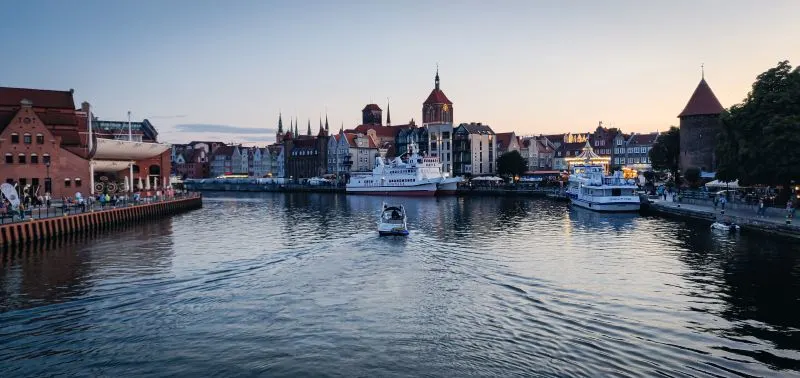
A Motława River Cruise offers a scenic and leisurely way to explore the picturesque waterfront of Gdańsk, Poland. The Motława River flows through the heart of the city, and a cruise along its waters provides a unique perspective of Gdańsk’s historical architecture, landmarks, and maritime heritage.
During a Motława River Cruise, you’ll have the opportunity to admire the city’s skyline from a different angle, taking in the sight of colorful merchant houses, Gothic churches, and iconic structures such as the Gdańsk Crane and the medieval harbor.
The cruise provides a serene atmosphere, allowing you to relax and enjoy the gentle sway of the boat as you pass by the city’s most renowned sites.
Many cruises are guided, offering informative commentary that provides historical context, interesting facts, and stories about the landmarks you encounter along the way.
As you sail along the river, you’ll witness the fusion of Gdańsk’s medieval and modern elements, capturing the essence of its maritime identity.
Motława River Cruises are available in various formats, ranging from short sightseeing trips to longer tours that may include stops at specific attractions or opportunities for dining and entertainment on board.
These cruises are popular among tourists and locals alike, offering a memorable way to experience Gdańsk’s beauty and history from a unique vantage point.
21. Gdańsk University: Visit the oldest university in Gdańsk, known for its impressive architecture and historical significance

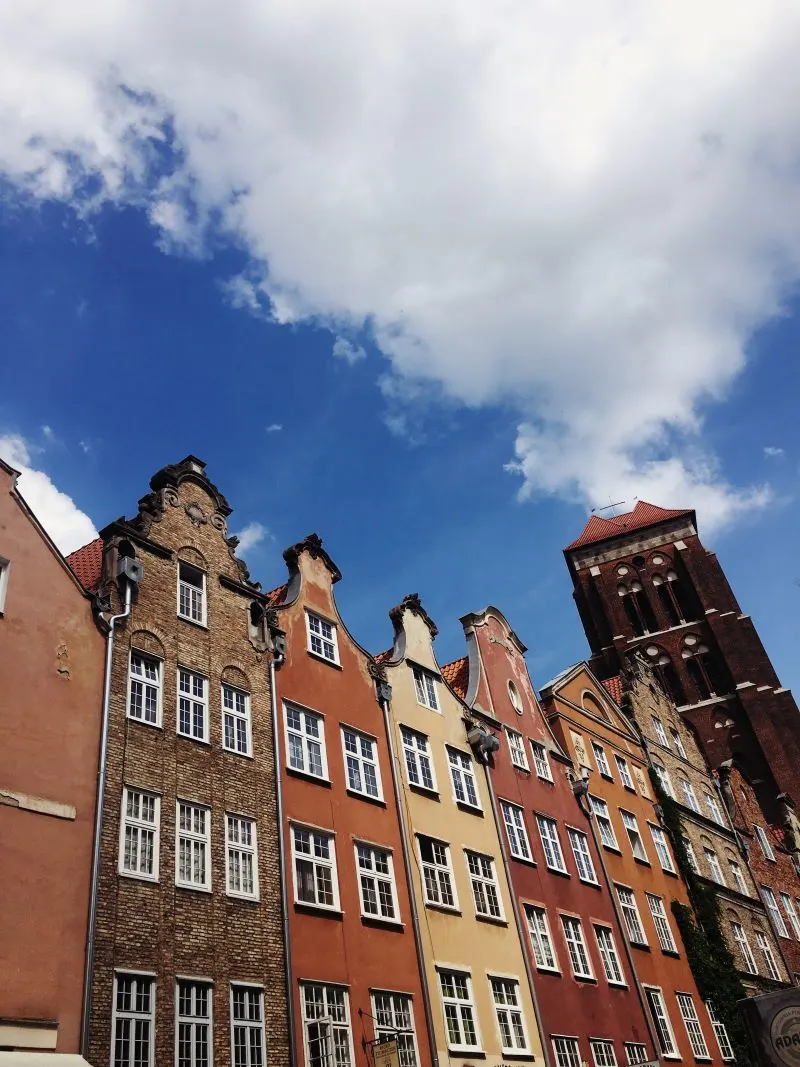
Gdańsk University, officially known as the University of Gdańsk (Uniwersytet Gdański in Polish), is a prominent higher education institution located in Gdańsk, Poland. Established in 1970, the university has grown to become one of the largest and most respected universities in the country.
The university offers a wide range of academic programs across various disciplines, including humanities, natural sciences, social sciences, and more. It comprises multiple faculties and institutes that cater to diverse fields of study, research, and education.
Gdańsk University is known for its commitment to high-quality education and research. It has a strong emphasis on interdisciplinary studies, fostering an environment where students and researchers can collaborate and explore different areas of knowledge.
The university’s campus features modern facilities, libraries, laboratories, and lecture halls that support academic endeavors. It also maintains partnerships with numerous international institutions, contributing to its global reach and reputation.
Beyond academic pursuits, Gdańsk University plays an active role in the local community and cultural life. It’s a hub for intellectual exchange, cultural events, conferences, and public lectures that contribute to the city’s vibrancy and intellectual growth.
22. St. Nicholas’ Church: Admire the stunning architecture of this 13th-century church, which has been beautifully restored

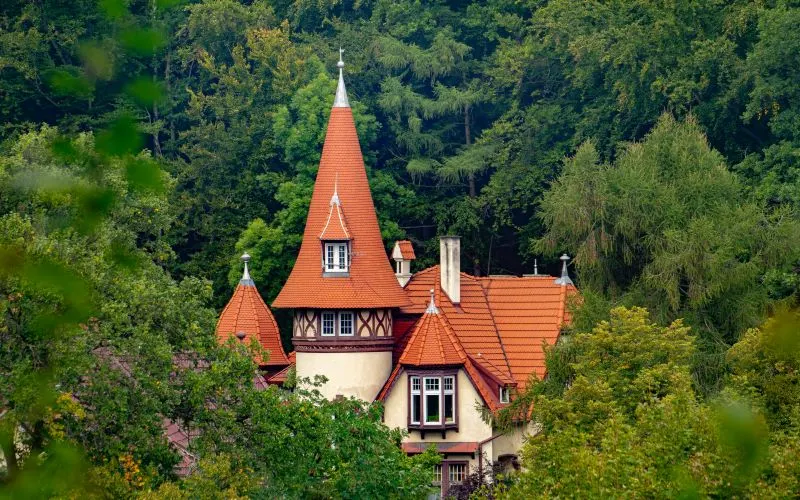
St. Nicholas’ Church, known as Kościół św. Mikołaja in Polish, is a historic religious building located in the heart of Gdańsk’s Old Town.
This significant Gothic church is one of the oldest and most recognizable landmarks in the city, with a rich history that dates back to the medieval period.
The church’s construction began in the 14th century, and its architectural style is characterized by the features of Brick Gothic design.
Its red-brick exterior, towering spire, and intricate details make it a remarkable example of the architectural style prevalent in the Baltic Sea region during that era.
Inside St. Nicholas’ Church, visitors can marvel at its soaring nave, ribbed vaults, and ornate decorations. The church’s interior exudes an atmosphere of serenity and spiritual reflection, with tall columns and stained glass windows that allow natural light to filter through.
One of the most distinctive features of St. Nicholas’ Church is its towering spire, which reaches a height of approximately 80 meters (262 feet).
The spire offers panoramic views of Gdańsk and the surrounding area, rewarding those who brave the climb with breathtaking vistas.
Throughout its history, St. Nicholas’ Church has witnessed various events, including religious ceremonies, historical milestones, and architectural restorations.
Today, it stands as both a place of worship and a cultural treasure, drawing visitors and locals alike with its historical significance, architectural beauty, and spiritual ambiance.
23. Gdańsk Science and Technology Centre: Engage in interactive exhibits and learn about science and technology in an entertaining way

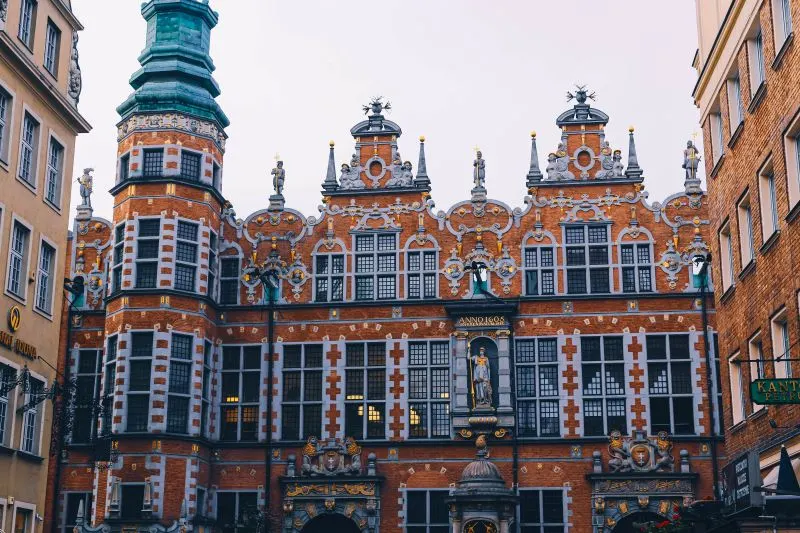
The Gdańsk Science and Technology Centre is a dynamic and interactive institution designed to engage visitors with science and technology concepts in an engaging and entertaining manner.
Through a variety of hands-on exhibits, demonstrations, and activities, the center aims to make learning about scientific principles and technological advancements accessible and enjoyable for people of all ages.
Visitors to the Gdańsk Science and Technology Centre can expect to encounter a range of interactive displays that explore various scientific disciplines, including physics, biology, chemistry, engineering, and more.
These exhibits often encourage active participation, allowing visitors to conduct experiments, solve puzzles, and explore how different scientific concepts impact everyday life.
One of the primary goals of the center is to foster curiosity and critical thinking. By presenting scientific principles in a fun and approachable way, the Gdańsk Science and Technology Centre aims to inspire a lifelong interest in learning and exploration.
The center may also host educational workshops, events, and presentations that further enhance the visitor experience and promote scientific literacy.
24. Museum of Gdańsk: Delve into the city’s history through exhibits that cover its various periods and cultural influences

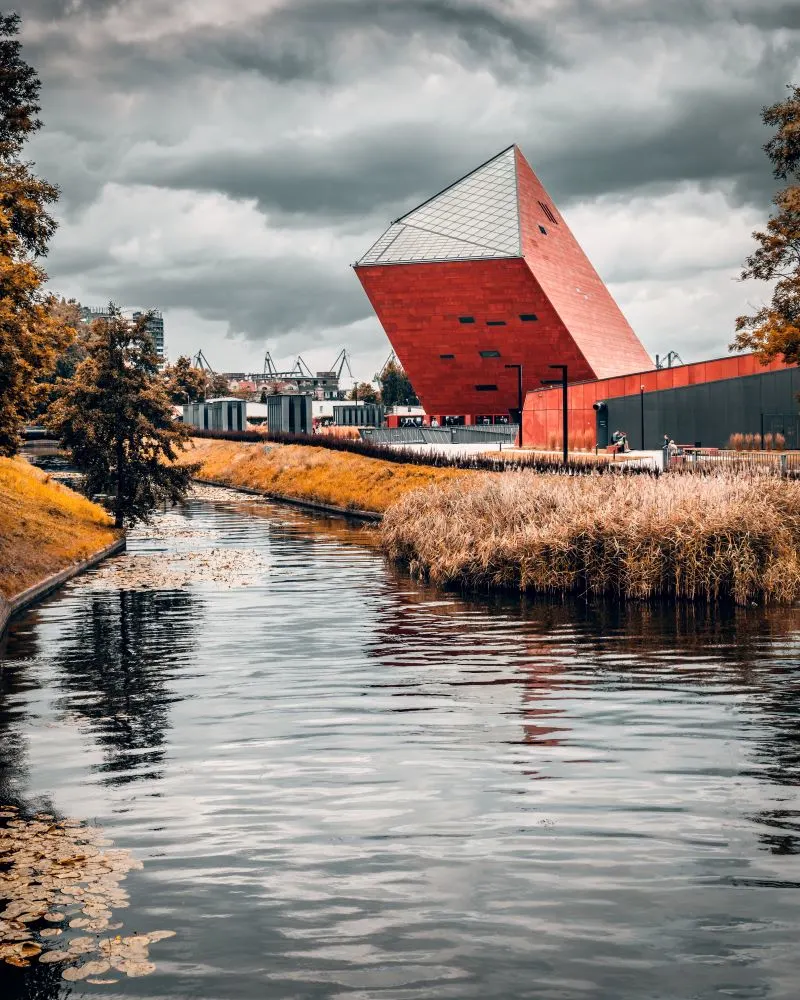
The Museum of Gdańsk (Muzeum Gdańska) is a prominent cultural institution located in Gdańsk, Poland. It is dedicated to preserving, showcasing, and interpreting the history, culture, and heritage of the city and its people.
The museum’s exhibits and collections provide insights into Gdańsk’s evolution as a vibrant maritime hub, a center of trade, and a city with a rich cultural tapestry.
The museum is housed in various historical buildings throughout the city, each offering a unique setting that complements the themes and eras covered in the exhibits.
Visitors can explore a diverse range of topics, from Gdańsk’s medieval origins to its role in maritime commerce, its connections with other European cities, and its contributions to art, literature, and science.
Exhibits within the Museum of Gdańsk often include artifacts, artworks, historical documents, and interactive displays that bring the city’s history to life.
The museum’s approach is both educational and engaging, allowing visitors to immerse themselves in Gdańsk’s past while gaining a deeper appreciation for its significance in shaping Poland’s identity and European history.
25. Chlebnicka Gate: Walk through this preserved gate and explore its museum, which focuses on Gdańsk’s fortifications

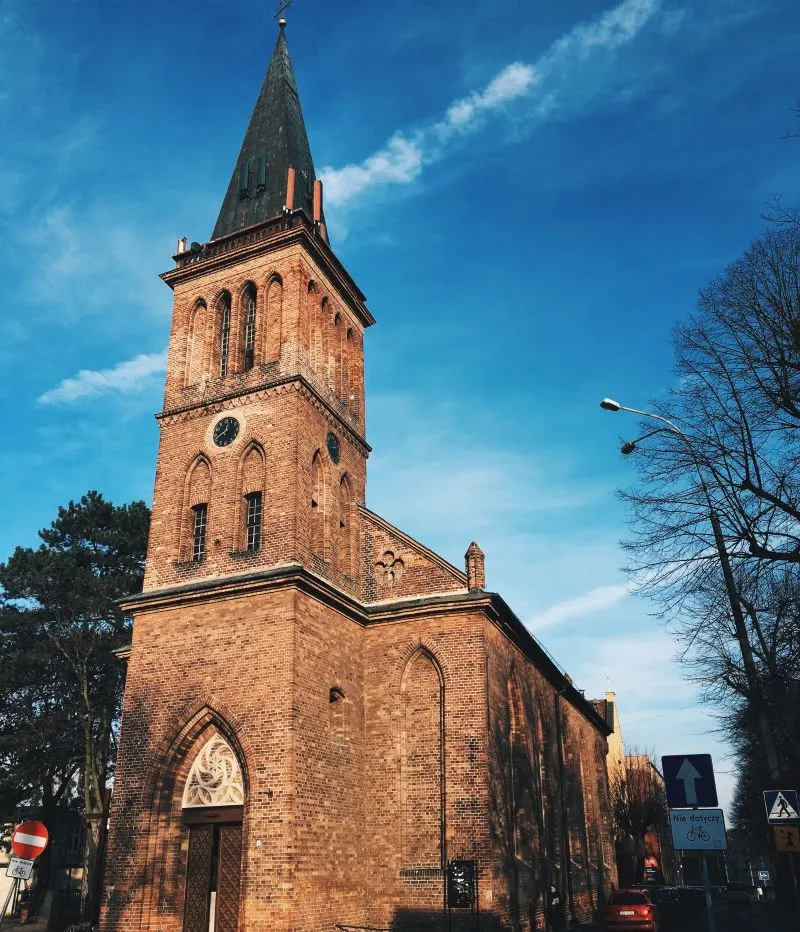
Chlebnicka Gate, also known as Brama Chlebnicka in Polish, is a historic gate located in Gdańsk, Poland. It is one of the surviving gateways from the medieval fortifications that once surrounded the city.
The gate is situated near the Motława River and stands as a reminder of Gdańsk’s historical architecture and its past as a significant trading port.
Built in the 16th century, Chlebnicka Gate is characterized by its Gothic and Renaissance architectural elements. It features a tall central passage for vehicles and pedestrians, flanked by smaller side passages.
The gate’s design incorporates red-brick construction and decorative details that reflect the architectural style of the time.
Chlebnicka Gate served as one of the entry points to Gdańsk’s Old Town and was an integral part of the city’s defensive walls. Over the centuries, Gdańsk underwent numerous changes and developments, and while much of the medieval fortifications were dismantled, Chlebnicka Gate managed to survive as a historical landmark.
Today, Chlebnicka Gate stands as a picturesque reminder of Gdańsk’s medieval past, offering visitors a glimpse into the city’s history and architectural heritage.
Its location near the Motława River adds to its charm, making it a notable spot for those exploring the city’s historical attractions and seeking to connect with its rich past.
Food In Gdańsk


Exploring Culinary Delights: A Gastronomic Journey Through Gdańsk
Gdańsk, a city steeped in history and culture, offers not only architectural marvels and stunning vistas but also a culinary landscape that tantalizes the taste buds of locals and visitors alike.
From traditional Polish dishes to international flavors, Gdańsk’s food scene is a delightful reflection of its diverse heritage and vibrant present.
Traditional Polish Cuisine
No culinary journey through Gdańsk would be complete without savoring the authentic flavors of traditional Polish cuisine.
Pierogi, those beloved dumplings filled with various fillings like meat, potatoes, cheese, or fruits, are a staple. Pair them with sour cream and a sprinkle of chives for the perfect taste of comfort.
Another Polish favorite is bigos, a hearty sauerkraut and meat stew known as “hunter’s stew.” Its rich flavors and aromatic spices capture the essence of Polish home-cooked meals.
If you’re feeling adventurous, try oscypek, a smoked cheese made from sheep’s milk, often served with cranberry sauce.
Seafood Delights
Gdańsk’s coastal location ensures that seafood features prominently on its menus. Fresh Baltic fish take center stage, with herring prepared in various ways being a local specialty. Don’t miss the chance to try “sledz,” a marinated herring dish that offers a burst of flavors.
For those seeking more upscale seafood experiences, Gdańsk offers gourmet delights such as Baltic salmon, cod, and mussels prepared with exquisite sauces and presentations that highlight the region’s marine bounty.
Gdańsk’s Amber Gold: Goldwasser Liqueur
In a city known for its amber trade, it’s no surprise that Gdańsk has its unique amber-infused liqueur called Goldwasser.
This historic drink features real gold flakes suspended in a mixture of spices and herbs. Sipping Goldwasser is like savoring a piece of Gdańsk’s history and craftsmanship.
Global Flavors and Fusion Cuisine
Gdańsk’s food scene also embraces international influences, offering an array of global flavors to satisfy every palate. Trendy cafes and restaurants are known for their fusion dishes that blend traditional Polish ingredients with modern culinary techniques.
Whether you’re craving Mediterranean delights, Asian-inspired creations, or international classics, Gdańsk has an array of options that showcase its diverse and cosmopolitan spirit.
Street Food Adventures
Gdańsk’s culinary offerings extend to the streets, where food trucks and stalls offer quick and flavorful bites. Look for “zapiekanka,” a popular Polish open-faced sandwich topped with mushrooms, cheese, and other toppings. You’ll find it’s the perfect snack to fuel your exploration of the city.
Satisfying Your Sweet Tooth
No gastronomic journey is complete without dessert. Indulge in “pączki,” Polish doughnuts filled with sweet fillings like jam or cream. Pair them with a cup of rich, aromatic Polish coffee for a perfect ending to a meal.
Bringing Gdańsk Home
To take a piece of Gdańsk’s culinary magic with you, explore local markets and food shops. Stock up on artisanal cheeses, locally produced honey, and spices to recreate the flavors of Gdańsk in your own kitchen.
Gdańsk’s food scene is a reflection of its history, maritime culture, and global influences, offering a diverse array of flavors that cater to all tastes.
Whether you’re exploring traditional Polish cuisine, savoring seafood by the sea, or embracing international fusion, Gdańsk invites you to embark on a gastronomic adventure that’s as rich and diverse as the city itself.
Top 20 Best Restaurants In Gdańsk, Poland


- Restauracja Fahrenheit – Known for its modern Polish cuisine and elegant atmosphere.
- Kubicki Restaurant – Offers traditional Polish dishes in a historic setting.
- Brovarnia Gdańsk – A brewery and restaurant serving local beers and hearty meals.
- Gdańska Restaurant – Offers a mix of Polish and European dishes with a modern twist.
- Stary Manekin – Known for its pierogi and traditional Polish comfort food.
- Restauracja Kresowa – Features dishes from Eastern Polish and Lithuanian cuisines.
- Restaurant Elewator – Offers Polish and European cuisine with a focus on seafood.
- Piwna 47 – A cozy eatery serving Polish and international dishes.
- Pod Łososiem Restaurant – Specializes in fish and seafood dishes.
- Restauracja Kubicki – Offers Polish cuisine in a historic townhouse setting.
- Restauracja Żuraw – Located in the Gdańsk Crane, serving traditional Polish fare.
- Młoda Wieprzowina – Known for its pork dishes and cozy ambiance.
- Restauracja Konrad – Offers Polish and European cuisine with a riverside view.
- Pierogarnia Mandu – A popular spot for various types of pierogi.
- Piano Restaurant & Café – Combines Polish and international flavors.
- Restauracja Schabowy i Pstrąg – Specializes in schnitzel and trout dishes.
- Restauracja Gdańska – Offers traditional Polish cuisine with a modern twist.
- Filharmonia Restaurant – Located near the Philharmonic Hall, offers diverse dishes.
- Sakana Sushi & Ramen – Japanese restaurant known for sushi and ramen.
- Eliksir Restaurant – Offers Polish and European cuisine in a historic location.
Transportation In Gdańsk
Transportation in Gdańsk is well-developed and offers various options for getting around the city and its surrounding areas.
From public transportation to taxis and more, Gdańsk provides visitors and residents with convenient ways to explore the city and its attractions.
Public Transportation:
- Trams: Gdańsk has an extensive tram network that covers most parts of the city, making it a popular and efficient way to travel. Trams are a convenient mode of transportation for both locals and tourists, connecting key areas of the city.
- Buses: Buses complement the tram network and provide access to areas that might not be covered by trams. They offer a comprehensive way to get around Gdańsk and reach neighborhoods that are farther from the city center.
Ticketing: Public transportation in Gdańsk operates on a unified ticketing system, which means that the same ticket can be used for trams and buses. Tickets can be purchased at kiosks, vending machines, or from the driver (for buses).
Taxis:
- Taxis: Taxis are widely available in Gdańsk and offer a convenient option for door-to-door transportation. They can be hailed on the street or booked through taxi companies.
Ride-Sharing:
- Ride-Sharing Services: Popular ride-sharing platforms like Uber operate in Gdańsk, providing an alternative to traditional taxis. These services can be accessed through mobile apps.
Bicycles:
- Bike Rentals: Gdańsk is a bike-friendly city with dedicated bike lanes and paths. Many places offer bike rentals, allowing you to explore the city on two wheels. It’s a great way to see the sights while enjoying the fresh air.
Ferries:
- Ferries: Given its coastal location, Gdańsk has ferry services that connect different parts of the city, including routes across the Motława River. These ferries provide a scenic and unique way to travel and enjoy views of Gdańsk from the water.
Travel Cards:
- Travel Cards: If you plan to use public transportation frequently, consider purchasing a travel card, which can provide cost savings compared to buying individual tickets for each ride.
Gdańsk’s transportation options offer convenience and flexibility, whether you’re exploring the historical Old Town, traveling to attractions, or venturing out to the nearby Tricity area, which includes Gdynia and Sopot.
Plan your transportation based on your preferences and the places you want to visit to make the most of your time in Gdańsk.
In conclusion, Gdańsk, Poland, is a city that effortlessly weaves together the threads of its rich history, vibrant culture, and modern charm to create an unforgettable travel experience.
From the awe-inspiring architecture of its Old Town to the maritime legacy that has shaped its identity, Gdańsk offers a diverse array of activities and attractions that cater to a wide range of interests.
Whether you’re an art enthusiast exploring the galleries and museums, a history buff tracing the footsteps of World War II or the Solidarity movement, or simply a traveler seeking picturesque landscapes and culinary delights, Gdańsk has something to captivate your senses.
The city’s maritime heritage resonates through its ports, shipyards, and iconic landmarks, connecting its past with its present.
Gdańsk’s charm extends beyond its historical sites; it encompasses a dynamic cultural scene, a welcoming atmosphere, and a sense of modern vitality that harmonizes with its centuries-old backdrop. Its bustling markets, lively cafes, and diverse culinary offerings reflect the cosmopolitan spirit of a city that has been a melting pot of cultures for centuries.
As you explore the cobbled streets, listen to the stories whispered by historic buildings, and breathe in the salty air from the Baltic Sea, you’ll feel the layers of Gdańsk’s past come alive.
Whether you’re gazing at the intricate details of St. Mary’s Church, sipping coffee along the Long Market, or contemplating the significance of Westerplatte, Gdańsk invites you to be part of its narrative.
In essence, the 25 best things to do in Gdańsk paint a vivid portrait of a city that’s both a living testament to its history and a vibrant canvas of contemporary experiences.
Gdańsk leaves an indelible mark on every traveler, offering not just memorable sights but also a sense of connection to the city’s soul, its stories, and its enduring legacy.
Leave a comment