

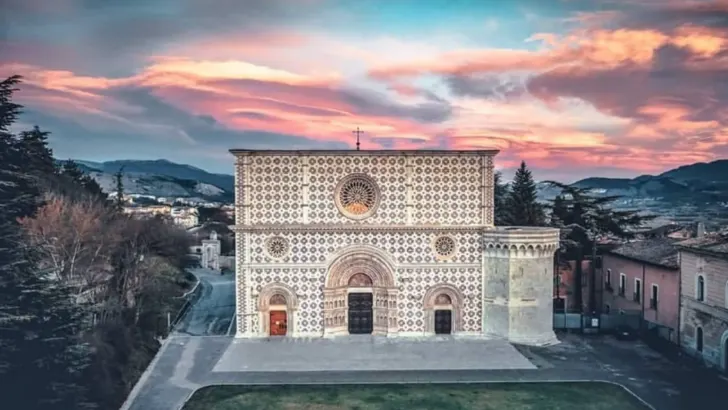

L’Aquila, a city nestled in the heart of the Abruzzo region in central Italy, captivates visitors with its rich history, stunning architecture, and picturesque surroundings. Known as the “Eagle” for its strategic location in a valley surrounded by majestic mountains, L’Aquila has been a cultural and economic hub since its founding in the 13th century.
History and Heritage
Founded in 1254 by Frederick II, Holy Roman Emperor, L’Aquila quickly became a center of trade and culture in the Kingdom of Naples. Its strategic position along ancient trade routes contributed to its prosperity, reflected in its well-preserved medieval and Renaissance architecture. The city’s historical significance is evident in its numerous churches, palaces, and public squares, each telling a story of centuries past.
Architectural Splendor
L’Aquila boasts a distinctive architectural style that blends medieval, Renaissance, and Baroque influences. The city center is adorned with elegant palaces, imposing churches, and ornate fountains, showcasing the craftsmanship and artistic prowess of its builders. Notable landmarks include the Basilica di Santa Maria di Collemaggio, with its striking facade and historical significance as a pilgrimage site, and the Fontana delle 99 Cannelle, an iconic fountain symbolizing communal life.
Cultural Riches
The cultural vibrancy of L’Aquila is evident in its festivals, traditions, and culinary heritage. The city celebrates local traditions with fervor, from religious processions honoring patron saints to festivals showcasing Abruzzese cuisine and craftsmanship. Traditional dishes such as maccheroni alla chitarra, hearty meats, and fine wines reflect the region’s agricultural bounty and culinary expertise.
Natural Beauty
Surrounded by the rugged peaks of the Gran Sasso and Monti della Laga National Park, L’Aquila offers breathtaking natural scenery and outdoor recreational opportunities. The nearby Campo Imperatore plateau, often referred to as “Italy’s Little Tibet,” provides panoramic views and opportunities for hiking, skiing, and exploring alpine flora and fauna.
Challenges and Resilience
In 2009, L’Aquila faced a tragic earthquake that caused significant damage to its historical buildings and infrastructure. Despite the challenges of recovery and reconstruction, the city continues to preserve its cultural heritage and rebuild its communities, showcasing resilience and determination in the face of adversity.
L’Aquila invites visitors to explore its historical treasures, experience its vibrant culture, and immerse themselves in the natural beauty of the Abruzzo region. Whether strolling through its ancient streets, savoring local delicacies, or discovering its architectural marvels, L’Aquila offers a captivating journey through the soul of Italy’s cultural and historical heritage.
1. Basilica di Santa Maria di Collemaggio

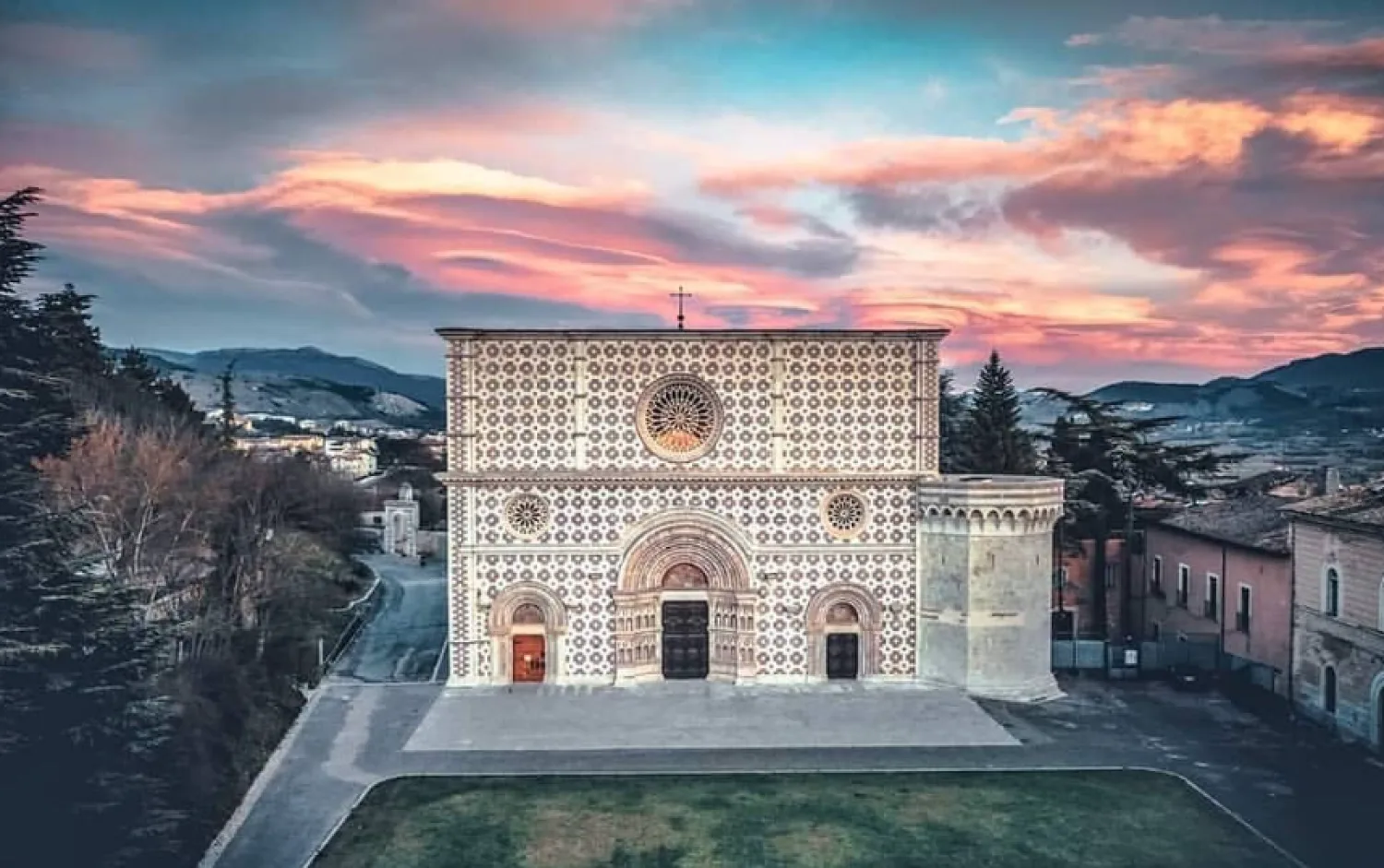
The Basilica di Santa Maria di Collemaggio is a striking example of Abruzzese Romanesque architecture located in L’Aquila, Italy. Built in the 13th century, it is renowned for its elegant and harmonious design, characterized by a simple yet dignified facade adorned with three rose windows. The interior features a nave and two aisles, lined with columns topped by capitals embellished with floral motifs.
One of the most notable aspects of the basilica is its historical significance as the site where Pope Celestine V was crowned in 1294, making it an important pilgrimage destination.
The basilica’s exterior is composed of alternating bands of white and pink stone, typical of local architectural styles, contributing to its distinctive appearance against the backdrop of the Apennine Mountains.
Despite suffering damage from earthquakes over the centuries, the Basilica di Santa Maria di Collemaggio remains a symbol of spiritual devotion and architectural beauty in the region of Abruzzo, attracting visitors and pilgrims alike with its rich history and serene atmosphere.
2. Fontana delle 99 Cannelle

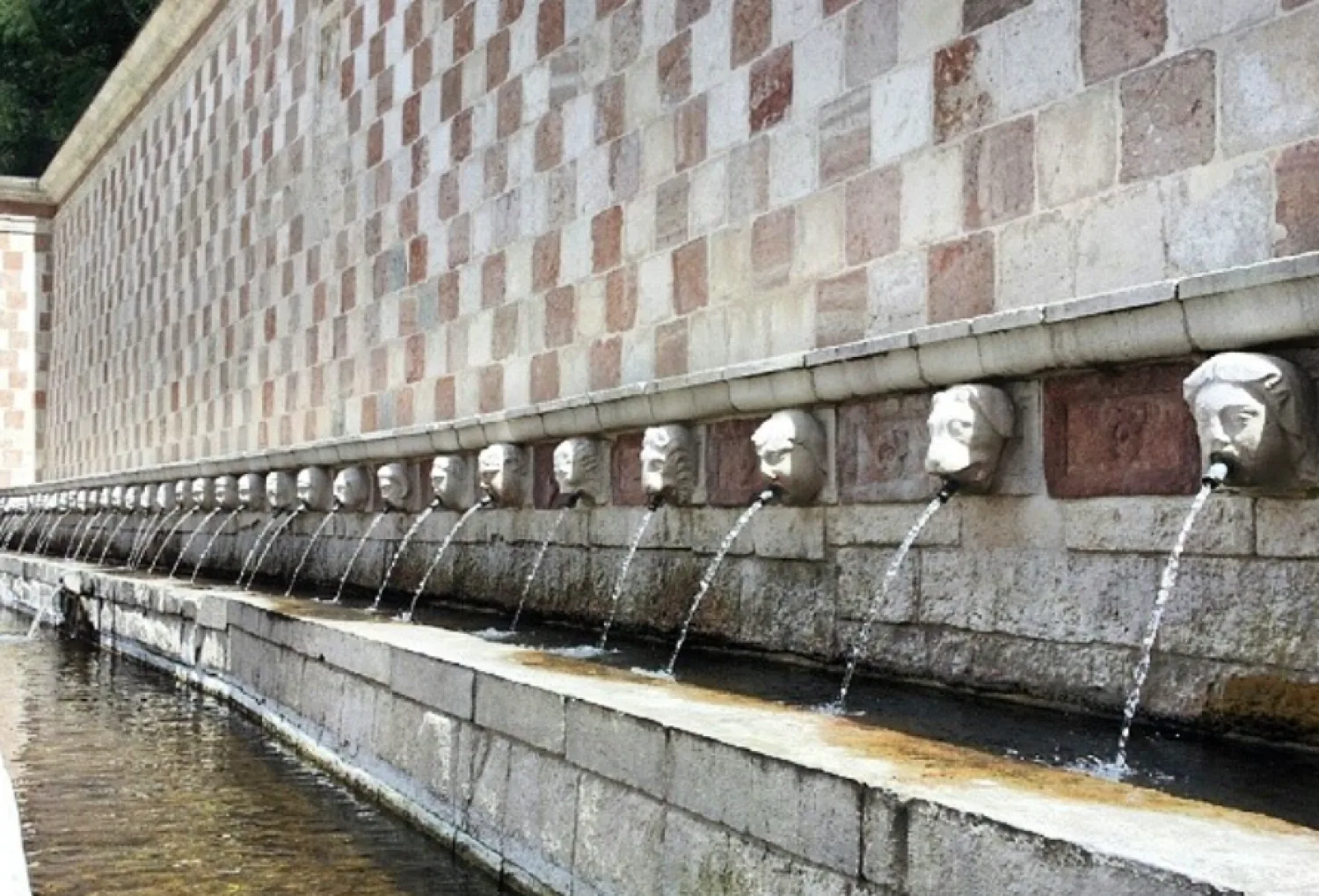
The Fontana delle 99 Cannelle, or Fountain of the 99 Spouts, is a historic fountain located in L’Aquila, Italy. It is one of the most iconic and unique landmarks in the city, renowned for its intriguing design and historical significance.
The fountain dates back to the 13th century and is named after the ninety-nine spouts or small water outlets that adorn its sides. These spouts are arranged in three rows and are believed to symbolize the ninety-nine castles or villages that were part of the original Aquilan territory in medieval times.
Stylistically, the Fontana delle 99 Cannelle reflects a blend of Gothic and Renaissance influences, typical of the period in which it was constructed. The fountain is built from local stone, with each spout intricately carved and positioned along the three-tiered structure. Water once flowed from these spouts into troughs below, serving as a public water source for the community.
Historically, the fountain was not only a vital water supply but also a symbol of communal identity and pride for the people of L’Aquila. Over the centuries, it has undergone several renovations and restorations due to damage from earthquakes and the passage of time.
Today, the Fontana delle 99 Cannelle stands as a testament to L’Aquila’s rich cultural heritage and architectural legacy. It remains a popular attraction for visitors, offering a glimpse into the city’s medieval past and serving as a reminder of the resilience of its inhabitants.
3. Fortress of L’Aquila (Rocca di L’Aquila)
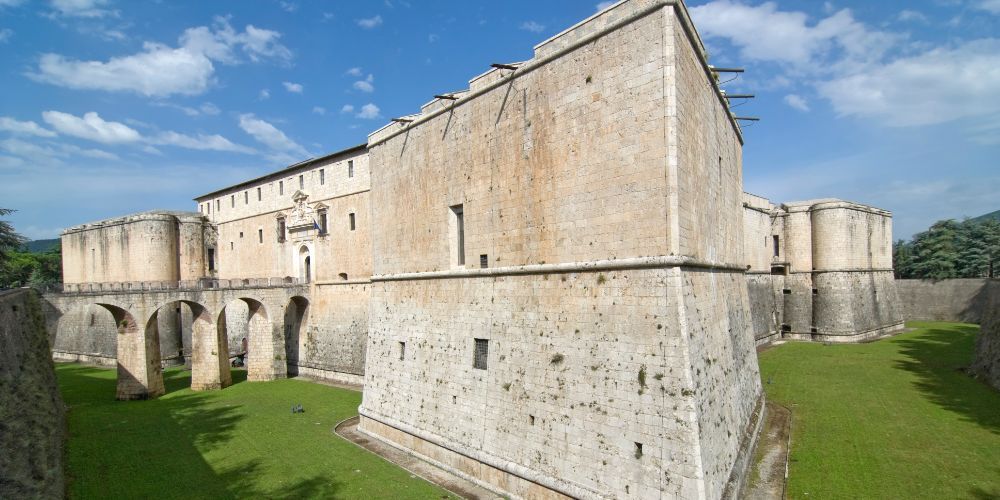
The Fortress of L’Aquila, known as Rocca di L’Aquila in Italian, is a medieval fortress located in the historic center of L’Aquila, Italy. It stands prominently atop a hill overlooking the city, commanding a strategic position that historically ensured its role in defense and governance.
Constructed in the 16th century under the Spanish rule of Emperor Charles V, the fortress was designed by the Spanish military architect Pedro Luis Escrivà. Its architecture reflects a blend of military functionality and Renaissance aesthetics, characterized by thick walls, bastions, and a robust defensive structure typical of fortresses built during that era.
The Rocca di L’Aquila consists of a large central courtyard surrounded by imposing walls and fortified towers. The entrance gate is adorned with the Spanish coat of arms and features a drawbridge that once provided access over a moat, underscoring its defensive nature.
Throughout its history, the fortress played a crucial role in the defense of L’Aquila against various external threats. Over time, it also served as a residence for local lords and governors, including the Spanish viceroys who administered the region.
Today, the Fortress of L’Aquila stands as a significant historical landmark and cultural site within the city. While it suffered damage during earthquakes, efforts have been made to restore and preserve its architectural integrity. Visitors to L’Aquila can explore the fortress to admire its military architecture, enjoy panoramic views of the city and surrounding mountains, and appreciate its role in the city’s history.
4. Church of San Bernardino

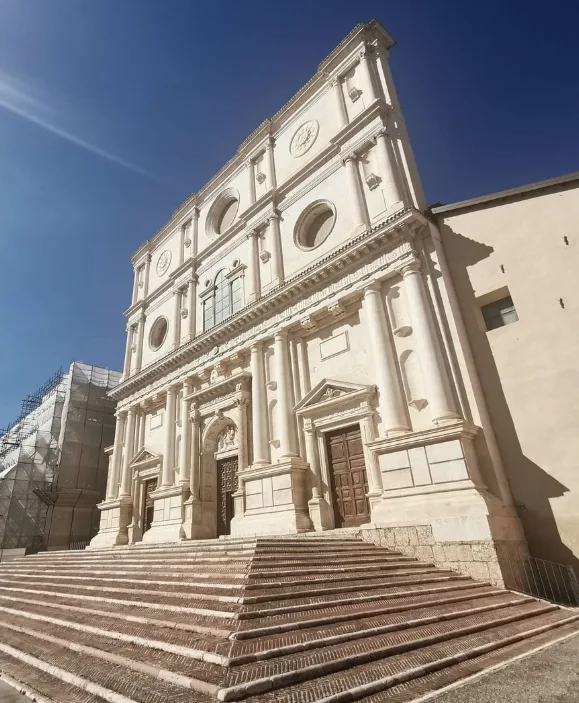
The Church of San Bernardino is a prominent religious landmark located in L’Aquila, Italy. Named after Saint Bernardino of Siena, a 15th-century Franciscan friar known for his preaching and charitable works, the church was constructed in the late 15th century and completed in the early 16th century.
Architecturally, the Church of San Bernardino is a fine example of Renaissance style with some Gothic influences. Its facade is characterized by a harmonious blend of white and pink stone, typical of local Abruzzese architecture. The facade features a rose window and intricate decorations, showcasing the artistic craftsmanship of its time.
One of the most notable features of the church is its interior, which is richly adorned with frescoes attributed to the renowned Abruzzese painter Andrea de Litio. These frescoes depict scenes from the life of Saint Bernardino, as well as other religious motifs, creating a visually stunning atmosphere that reflects the spiritual devotion of the period.
The church is also famous for its elegant bell tower, which stands adjacent to the main structure and adds to the skyline of L’Aquila. The interior is designed in a single nave with side chapels, adorned with altars and sculptures that further enhance its religious significance and artistic beauty.
Throughout history, the Church of San Bernardino has been a focal point for religious ceremonies, including the veneration of Saint Bernardino, whose relics were once housed here. Despite suffering damage during earthquakes, ongoing efforts have been made to restore and preserve this cultural gem, ensuring that it continues to be a place of worship and a testament to L’Aquila’s architectural heritage.
5. Palazzo del Governo
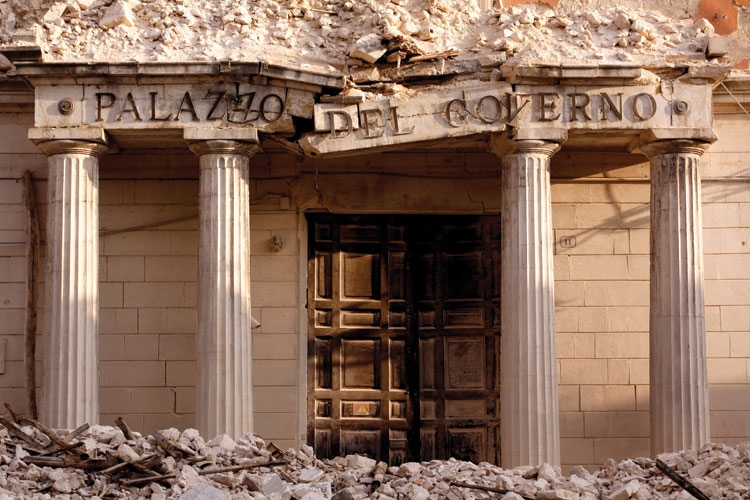
Palazzo del Governo, also known as the Government Palace, is a historic building located in L’Aquila, Italy. It was constructed in the 16th century during the Spanish rule of Emperor Charles V. The palace is characterized by its imposing Renaissance architecture, featuring a symmetrical facade with large windows and a central portal adorned with the Spanish coat of arms.
Throughout its history, Palazzo del Governo has served as the seat of political and administrative power in L’Aquila, housing various governmental offices and administrative functions.
The interior is designed in a style befitting its governmental role, with grand halls, frescoed ceilings, and ornate decorations that reflect the prestige and authority of its occupants.
Despite suffering damage from earthquakes, including the devastating earthquake of 2009, efforts have been made to restore Palazzo del Governo to its former splendor, preserving its historical significance and architectural beauty as a symbol of L’Aquila’s civic identity and heritage.
6. Campo Imperatore
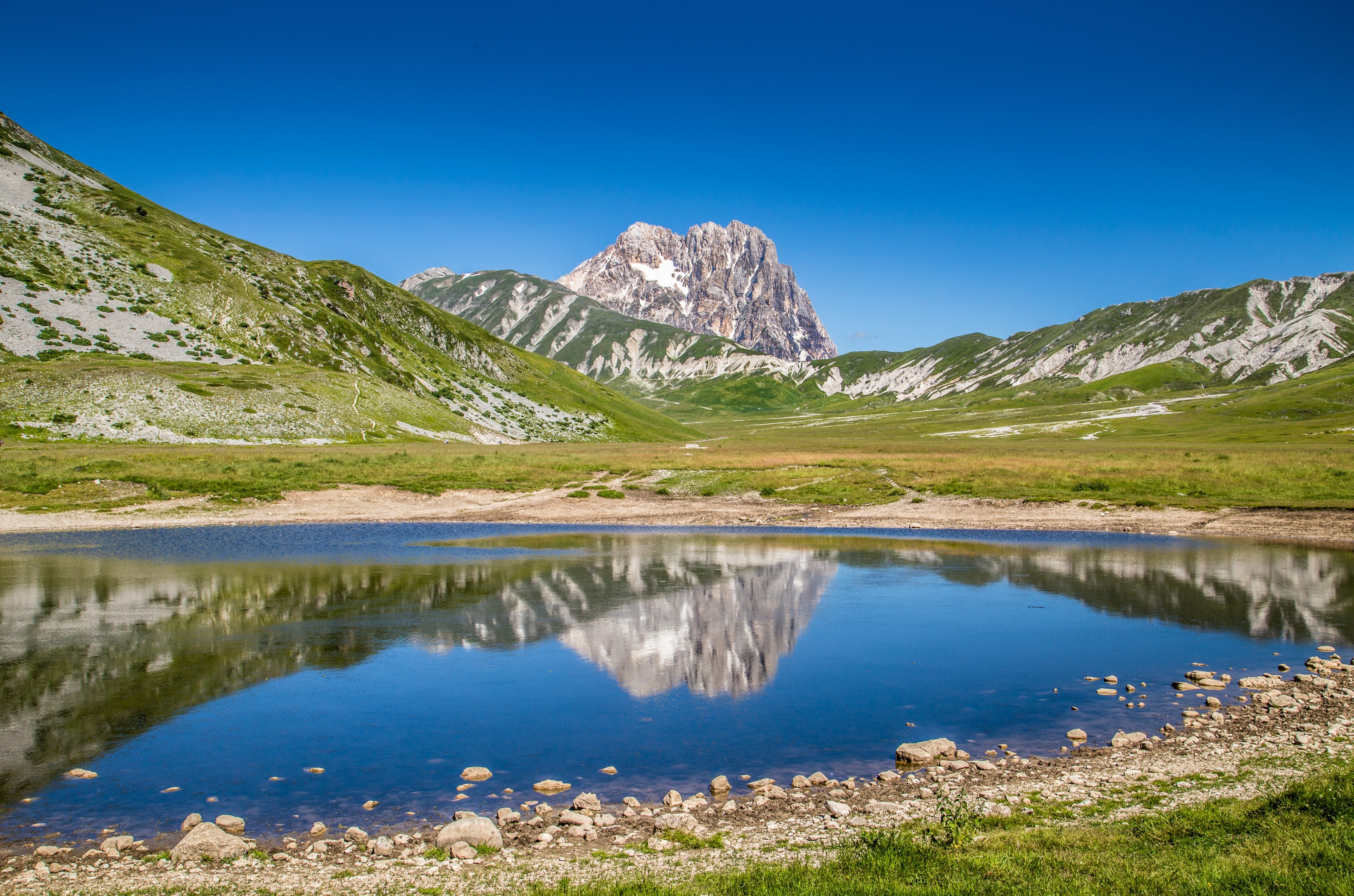
Campo Imperatore in L’Aquila refers to the area known as “Little Tibet” or the “Grand Canyon of Italy,” located within the Gran Sasso e Monti della Laga National Park.
It’s a vast plateau situated in the Apennine Mountains, just outside the city of L’Aquila. Campo Imperatore is famous for its expansive alpine landscape, rolling hills, and rugged terrain, offering panoramic views of the surrounding peaks, including the majestic Corno Grande, the highest peak in the Apennines.
This area is renowned not only for its natural beauty but also for its biodiversity, with diverse flora and fauna inhabiting the meadows and forests. Campo Imperatore is a popular destination for outdoor activities such as hiking, skiing (in winter), and mountaineering. It’s accessible by car or cable car from Fonte Cerreto, a nearby village.
Historically, Campo Imperatore gained fame as the site where physicist Enrico Fermi conducted experiments leading to the discovery of nuclear fission in the 1930s. Today, it remains a cherished natural and cultural landmark, offering visitors from L’Aquila and beyond a chance to immerse themselves in the pristine wilderness of the Apennines.
7. Gran Sasso e Monti della Laga National Park


Gran Sasso e Monti della Laga National Park is a vast protected area located in the regions of Abruzzo, Lazio, and Marche in central Italy. It was established in 1991 to preserve and showcase the diverse natural and cultural heritage of the Apennine Mountains.
The park is named after two main mountain groups: Gran Sasso and Monti della Laga. Gran Sasso, the largest massif in the Apennines, is known for its high-altitude plains, dramatic cliffs, and the iconic Corno Grande peak, which rises to 2,912 meters, making it the highest point in the Apennine range.
Monti della Laga, situated to the north of Gran Sasso, is characterized by rolling hills, deep gorges, and dense beech forests. This area is less rugged than Gran Sasso but equally picturesque, offering scenic vistas and opportunities for hiking, wildlife watching, and exploring historical villages.
The national park is home to a rich variety of flora and fauna, including rare species such as the Apennine wolf, golden eagle, and Abruzzo chamois. It encompasses diverse ecosystems ranging from mountain meadows to high-altitude peaks, providing habitats for a wide range of plant and animal species.
Visitors to Gran Sasso e Monti della Laga National Park can enjoy numerous outdoor activities throughout the year, including hiking along scenic trails, skiing in winter, and visiting cultural sites such as ancient hermitages and medieval villages scattered throughout the region. The park’s pristine wilderness and scenic beauty make it a popular destination for nature enthusiasts and adventurers seeking to explore the natural wonders of central Italy.
8. Museo Nazionale d’Abruzzo


The Museo Nazionale d’Abruzzo, or National Museum of Abruzzo, is a significant cultural institution located in L’Aquila, Italy. It houses a diverse collection of artifacts, artworks, and archaeological finds that showcase the history, art, and cultural heritage of the Abruzzo region.
The museum is housed in the 16th-century Palazzo Ardinghelli, a historic building that itself is of architectural interest. Its collections are organized chronologically and thematically, covering periods from prehistory to the Middle Ages, and include exhibits on ancient civilizations such as the Samnites and the Romans.
Highlights of the Museo Nazionale d’Abruzzo include archaeological artifacts such as pottery, sculptures, and coins, as well as medieval and Renaissance artworks. The museum also features exhibits on traditional Abruzzese crafts, local folklore, and the natural history of the region.
Visitors to the museum can explore its various sections to gain insight into the rich cultural tapestry of Abruzzo, from its ancient origins through to the medieval period and beyond. The Museo Nazionale d’Abruzzo serves as an important educational and cultural center, preserving and promoting the heritage of Abruzzo for both locals and visitors alike.
9. Church of San Pietro a Coppito
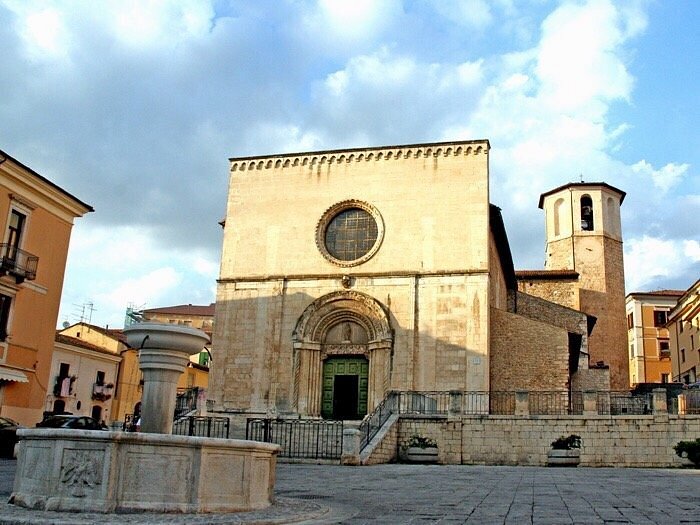
The Church of San Pietro a Coppito is a historic Romanesque church located in Coppito, a frazione (hamlet) near L’Aquila, Italy. Dating back to the 12th century, it is renowned for its simple yet elegant architectural style typical of Abruzzese Romanesque churches.
The church is characterized by a single nave with a timbered ceiling and a small apse. Its facade is adorned with a portal featuring sculpted decorations and a rose window above it. Inside, visitors can admire medieval frescoes that adorn the walls, depicting religious scenes and motifs.
The Church of San Pietro a Coppito holds significance not only as a place of worship but also as a cultural and historical landmark in the region. It reflects the artistic and architectural traditions of medieval Abruzzo and serves as a testament to the enduring spiritual and cultural heritage of the area.
Despite suffering damage from earthquakes over the centuries, efforts have been made to preserve and restore the church, ensuring that its historical and architectural value continues to be appreciated by visitors and locals alike.
10. Fountain of the 13 Spouts (Fontana delle 13 Cannelle)

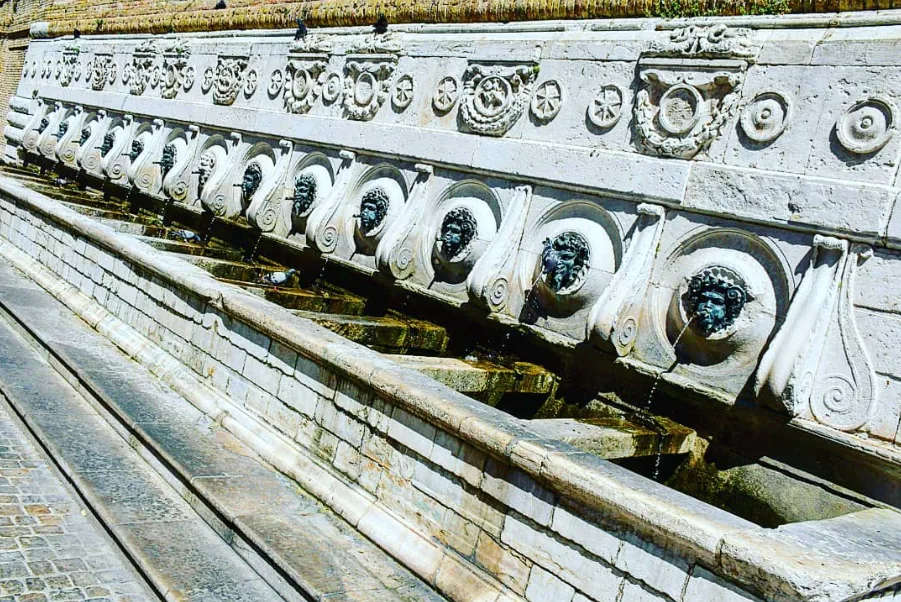
The Fountain of the 13 Spouts, or Fontana delle 13 Cannelle in Italian, is a historic fountain located in L’Aquila, Italy. Built in the 13th century, it is one of the oldest and most iconic landmarks in the city.
The fountain is named after the thirteen water spouts or cannelles that protrude from its sides, which originally provided water for the local community. These spouts are arranged in three rows, contributing to the fountain’s distinctive appearance.
Stylistically, the Fontana delle 13 Cannelle reflects medieval architectural influences, characterized by its robust stone structure and simple, functional design. The fountain served as a vital water source for centuries, symbolizing communal life and civic pride in L’Aquila.
Despite enduring damage from earthquakes, including the significant seismic events of 2009, efforts have been ongoing to restore the Fountain of the 13 Spouts to its former glory. It remains a cherished symbol of L’Aquila’s history and resilience, attracting visitors who admire its historical significance and architectural charm.
11. Church of Santa Giusta


The Church of Santa Giusta is a Romanesque church located in L’Aquila, Italy, dating back to the 13th century. It is known for its simple yet elegant architectural style, characteristic of medieval churches in the Abruzzo region.
The church features a single nave with a timbered ceiling and a small apse. Its facade is adorned with a Romanesque portal, typically decorated with sculpted motifs and intricate detailing. Inside, visitors can admire frescoes and artworks that depict religious themes and historical events.
The Church of Santa Giusta holds cultural and historical significance as a place of worship and as a repository of local art and architecture from the medieval period. It reflects the spiritual devotion and artistic craftsmanship of the time, offering visitors a glimpse into L’Aquila’s rich cultural heritage.
Despite experiencing damage from earthquakes over the centuries, efforts have been made to preserve and restore the Church of Santa Giusta, ensuring that it continues to be appreciated as a cultural and historical landmark in L’Aquila.
12. L’Aquila Public Park (Parco del Castello)

L’Aquila Public Park, also known as Parco del Castello (Castle Park), is a scenic green space located in the heart of L’Aquila, Italy. It is situated near the historic center of the city, offering a tranquil retreat amidst the urban landscape.
The park is notable for its expansive lawns, shady trees, and pathways that wind through gardens and recreational areas. It provides locals and visitors with a peaceful environment for leisure activities such as picnicking, jogging, and strolling.
One of the highlights of L’Aquila Public Park is its picturesque views of the surrounding mountains, including the Gran Sasso massif. These vistas add to the park’s appeal, offering a natural backdrop against the backdrop of the city’s historic architecture.
The park’s central location makes it easily accessible and a popular destination for families, tourists, and residents alike, seeking to enjoy nature and relax in a green oasis within the bustling cityscape of L’Aquila.
13. Museum of the 99 Cannelle


The Museum of the 99 Cannelle is a cultural institution located in L’Aquila, Italy, dedicated to showcasing the history and heritage of the city. It is named after the iconic Fountain of the 99 Spouts (Fontana delle 99 Cannelle), which is a symbol of L’Aquila’s medieval past.
The museum houses a collection of artifacts, archaeological finds, and exhibits that highlight various aspects of L’Aquila’s history, including its architecture, art, and traditions.
Visitors can explore displays that delve into the significance of the Fountain of the 99 Spouts and its role in the city’s communal life.
In addition to its historical exhibits, the Museum of the 99 Cannelle serves as a cultural center, hosting events, lectures, and educational programs aimed at promoting awareness and appreciation of L’Aquila’s cultural heritage.
14. Basilica di San Bernardino
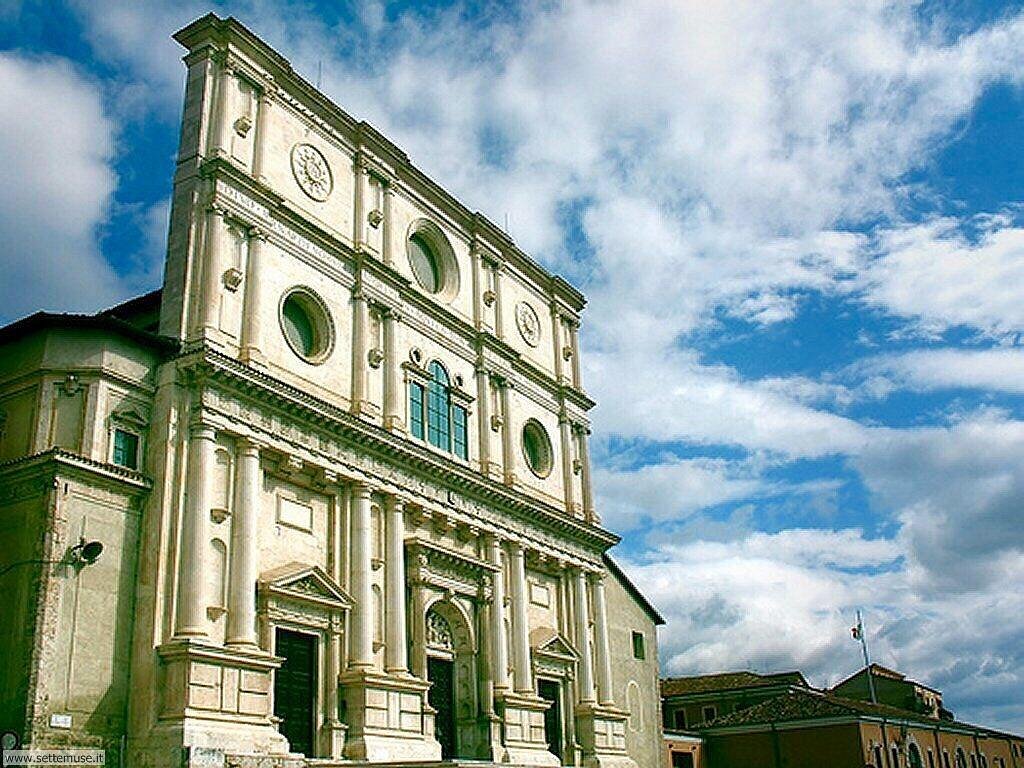
The Basilica di San Bernardino is a significant religious landmark located in L’Aquila, Italy. Constructed in the late 15th century, it is dedicated to Saint Bernardino of Siena, a prominent Franciscan friar known for his preaching and charitable work.
Architecturally, the basilica combines elements of Gothic and Renaissance styles, with a distinctive facade adorned by a large rose window and intricate decorations. Inside, the basilica features a single nave with side chapels housing altars adorned with religious artworks and sculptures.
One of the highlights of the Basilica di San Bernardino is its magnificent ceiling frescoes painted by the Abruzzese artist Andrea de Litio. These frescoes depict scenes from the life of Saint Bernardino and other religious themes, contributing to the spiritual ambiance of the church.
The basilica holds historical significance as the resting place of Saint Bernardino’s relics, which are housed in an elaborate shrine. It continues to be an important pilgrimage site and a center of religious devotion in L’Aquila.
Despite suffering damage from earthquakes, including the devastating quake of 2009, ongoing efforts have been made to restore and preserve the Basilica di San Bernardino, ensuring that its architectural beauty and spiritual legacy endure for future generations.
15. Local Cuisine


Pasta: Abruzzo is renowned for its pasta, especially the hearty and rustic varieties such as chitarra, a type of spaghetti square-cut with a guitar-like stringed tool, and maccheroni alla chitarra, typically served with a variety of sauces including meat ragù or tomato-based sauces.
Meat and Cheese: The region is known for its quality meats, including lamb, pork, and game meats such as wild boar. Traditional dishes include agnello al forno (roasted lamb) and arrosticini, skewers of grilled lamb or mutton. Abruzzo is also famous for its cheeses, such as pecorino abruzzese, a sheep’s milk cheese.
Seafood: Although L’Aquila is inland, Abruzzo’s Adriatic coast influences its cuisine with a variety of seafood dishes. Brodetto, a traditional fish stew, and calamari ripieni (stuffed squid) are popular coastal dishes.
Saffron: Abruzzo produces high-quality saffron, used to flavor and color many local dishes, such as risotto allo zafferano (saffron risotto) and brodetto con lo zafferano (saffron-infused fish stew).
Breads and Pastries: Abruzzo’s breads are often made with local grains, with pane di mais (cornbread) being a staple. Pastries like scrippelle ‘mbusse, thin crepes stuffed with cheese and served in broth, are also popular.
Wines: The region produces notable wines, including Montepulciano d’Abruzzo, a robust red wine, and Trebbiano d’Abruzzo, a crisp white wine, both complementing local dishes.
Food In L’Aquila


Exploring the Rich Culinary Heritage of L’Aquila: A Journey Through Abruzzese Cuisine
Nestled in the heart of the Abruzzo region, the city of L’Aquila boasts a culinary tradition as rich and varied as its storied history and picturesque landscapes. From hearty mountain dishes to flavorful coastal specialties, L’Aquila’s food scene offers a tantalizing glimpse into the essence of Abruzzese cuisine.
Pasta: A Pillar of Abruzzese Gastronomy
No exploration of Abruzzo’s culinary delights is complete without delving into its pasta traditions. In L’Aquila, pasta reigns supreme, with local favorites such as maccheroni alla chitarra taking center stage. This unique pasta, named for the guitar-like tool used to cut it, is typically served with robust meat sauces or savory ragùs that reflect the region’s agricultural roots and hearty mountain cuisine.
Hearty Meats and Cheeses
L’Aquila’s proximity to the rugged Apennine Mountains has shaped its culinary landscape, influencing a love for hearty meats and artisanal cheeses. Roasted lamb (agnello al forno) and skewers of tender grilled lamb or mutton (arrosticini) are beloved staples, showcasing Abruzzo’s expertise in preparing and savoring quality meats.
Cheese aficionados will delight in Abruzzo’s famed pecorino cheeses, particularly pecorino abruzzese, a distinctive sheep’s milk cheese known for its robust flavor and crumbly texture. Whether enjoyed on its own or paired with local honey and cured meats, pecorino offers a true taste of Abruzzese terroir.
Seafood Treasures from the Adriatic
Despite L’Aquila’s inland location, Abruzzo’s Adriatic coastline significantly influences its cuisine. Fresh seafood finds its way onto menus in the form of savory stews (brodetto) brimming with a variety of fish and shellfish, and delightful delicacies like stuffed squid (calamari ripieni). These dishes reflect the region’s maritime heritage and commitment to using the freshest ingredients from the Adriatic Sea.
Saffron: The Golden Spice of Abruzzo
Abruzzo’s agricultural prowess extends to the cultivation of saffron, a prized spice that adds both flavor and vibrant color to many local dishes. Saffron-infused risottos (risotto allo zafferano) and aromatic fish stews (brodetto con lo zafferano) are just a few examples of how this golden spice enhances Abruzzese cuisine, offering a sensory journey through the region’s culinary traditions.
Bread, Pastries, and Sweet Endings
No meal in L’Aquila is complete without indulging in its traditional breads and pastries. Locally baked cornbread (pane di mais) and rustic loaves reflect Abruzzo’s reliance on wholesome grains and traditional baking methods. For dessert, scrippelle ‘mbusse beckons—a delicate dish of crepes stuffed with cheese and bathed in savory broth, offering a comforting and satisfying conclusion to any meal.
Wines: Toasting to Abruzzo’s Viticultural Bounty
To accompany its delectable cuisine, Abruzzo boasts a selection of fine wines that rival those of Italy’s more famous wine regions. Montepulciano d’Abruzzo, a robust red wine known for its deep fruit flavors and velvety texture, pairs harmoniously with hearty meat dishes. Meanwhile, Trebbiano d’Abruzzo, a crisp and refreshing white wine, complements seafood and pasta dishes with its citrusy notes and lively acidity.
Embracing Tradition in Modern Times
While L’Aquila’s culinary traditions are deeply rooted in the past, the city’s chefs and restaurateurs are also embracing innovation and sustainability. Many eateries in L’Aquila proudly source their ingredients from local farms and producers, ensuring that traditional flavors are honored while also promoting a sustainable food culture.
20 Best Restaurant In L’Aquila


- Ristorante Reale – Via Castello, 10
- Ristorante Gran Sasso – Via Sallustio, 3
- Trattoria da Salvatore – Via XX Settembre, 1
- Ristorante Pizzeria Il Grillo – Piazza del Grillo, 7
- Antica Locanda L’Antico Borgo – Via Coppito, 15
- Trattoria Lo Scannabecco – Via Sassa, 12
- Osteria Sant’Andrea – Via S. Andrea, 12
- Ristorante Pizzeria Il Palazzetto – Piazza Palazzo, 3
- Ristorante Pizzeria Il Cantinone – Via Castello, 22
- Ristorante Pizzeria Re dei Bastardi – Via Castello, 21
- Trattoria Da Carla – Via Coppito, 31
- Ristorante Pizzeria da Franco – Via Quattro Cantoni, 21
- Locanda degli Artisti – Via dei Cavalieri, 7
- Ristorante Pizzeria Il Castello – Via XX Settembre, 12
- Trattoria degli Amici – Via dei Tigli, 8
- Ristorante Pizzeria Il Cavallino – Via Coppito, 7
- Osteria della Fortezza – Piazza Castello, 15
- Ristorante Il Pozzo – Via S. Pietro a Coppito, 21
- Ristorante Pizzeria Il Convento – Via XX Settembre, 30
- Trattoria Il Caminetto – Via XX Settembre, 19
Transportation In L’Aquila

Road Network
L’Aquila is accessible by several main roads and highways, including:
- SS17 (Strada Statale 17): Connects L’Aquila with Rome to the west and the Adriatic coast to the east.
- SS80 (Strada Statale 80): Runs north-south through Abruzzo, connecting L’Aquila with Teramo to the north and Foggia to the south.
- SP5 (Strada Provinciale 5): Provides local connections within the province of L’Aquila.
The city itself has a network of roads that facilitate access to different neighborhoods and attractions. Parking areas are available throughout the city center and near major landmarks.
Public Transit
L’Aquila’s public transit system includes buses operated by ARPA (Azienda Regionale Pubblica Abruzzese), which provide connections within the city and to nearby towns and villages. Key points in L’Aquila are served by frequent bus routes, making it relatively convenient to get around without a car.
Taxi Services
Taxis are available in L’Aquila and can be hailed at designated taxi stands or booked via phone. They provide a convenient option for travelers needing direct transportation to specific destinations within the city or surrounding areas.
Cycling and Walking
Given L’Aquila’s compact size, cycling and walking are viable options for exploring the city center. Many areas are pedestrian-friendly, with sidewalks and designated bike lanes. Cyclists can also enjoy scenic routes in the surrounding countryside.
Train Services
L’Aquila is currently not served by a railway station. Historically, there was a train station in L’Aquila, but it was closed after the earthquake in 2009. Plans for reopening or rebuilding the station are ongoing, with alternative transport solutions in place in the meantime.
Challenges and Considerations
- Earthquake Recovery: The city is still recovering from the devastating earthquake in 2009, which affected infrastructure including roads and public transit.
- Seasonal Variations: In winter, weather conditions in the mountainous region of Abruzzo can impact road travel, requiring caution and preparation.
In summary, while L’Aquila’s transportation infrastructure primarily relies on roads and buses, the city offers sufficient options for getting around and exploring its historical and natural attractions. Whether by bus, taxi, or on foot, visitors can navigate L’Aquila and its surroundings effectively, experiencing the unique charm and culture of this historic Italian city.
In conclusion, L’Aquila stands as a testament to resilience, heritage, and natural beauty in the heart of Abruzzo, Italy. Despite enduring challenges, including the devastating earthquake of 2009, the city continues to preserve and showcase its rich cultural tapestry and architectural splendor. From its medieval and Renaissance landmarks to the breathtaking landscapes of the surrounding mountains and plateaus, L’Aquila captivates visitors with its historical charm and scenic vistas.
Today, L’Aquila invites travelers to explore its ancient streets, marvel at its architectural wonders like the Basilica di Santa Maria di Collemaggio and the Fontana delle 99 Cannelle, and indulge in its distinctive culinary delights. Whether discovering local festivals, hiking in the nearby national parks, or simply savoring the warmth of its hospitality, L’Aquila offers a unique blend of history, culture, and natural beauty that leaves a lasting impression on all who visit.
As the city continues its journey of recovery and renewal, L’Aquila stands ready to welcome visitors with open arms, inviting them to uncover the enduring spirit and allure of this historic Italian gem.
Leave a comment